




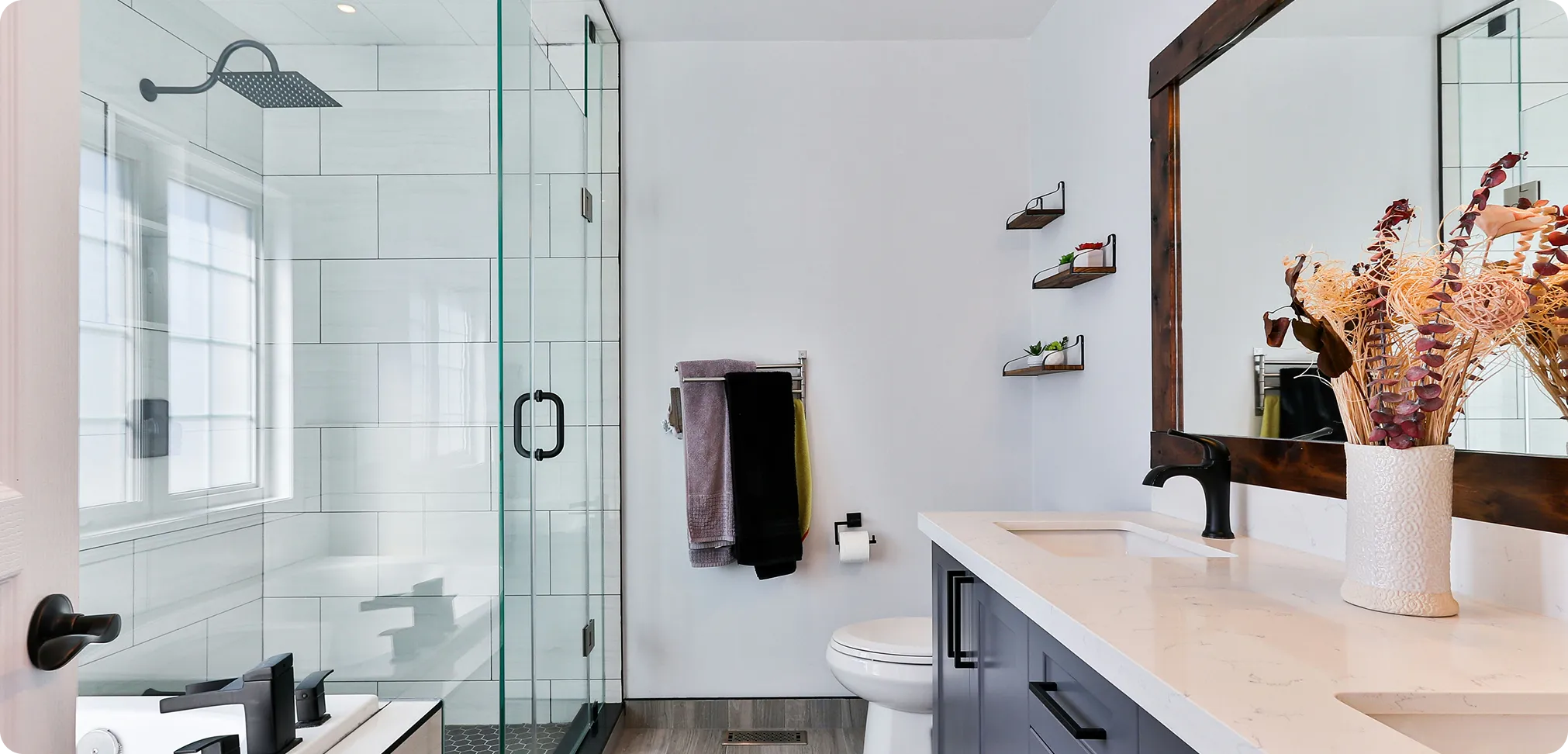
A bathroom gut is the most complete kind of bathroom renovation: everything comes out down to the wall studs and subfloor, including tile, drywall, fixtures, vanity, flooring and often the old supply and drain lines. Homeowners choose it when the room has problems a cosmetic refresh cannot fix, such as hidden water damage, failing plumbing or a layout that no longer works. Because every layer is rebuilt, it is also the only approach that lets you inspect and correct what sits inside the walls.
Below, we walk through the work in the order it actually happens on a Florida job site, from the first dumpster delivery to the final caulk line, and point out where decisions you make early will shape cost and schedule later.
Signs the Room Needs to Go Down to the Studs
Not every dated bathroom needs full demolition. A tired vanity and a dull floor can often be swapped without touching the walls. Stripping the space makes sense when one or more of these shows up:
- A soft or spongy floor near the toilet or tub, which usually means the subfloor has absorbed water over time.
- Tile that sounds hollow when tapped, grout cracks that keep coming back, or a shower wall that flexes under hand pressure.
- A musty odor that cleaning never removes, a common sign of mold behind the surfaces in our humid climate.
- Galvanized or polybutylene supply lines, or cast iron drains showing rust and slow flow.
- A layout you want to change, such as moving the toilet, enlarging the shower or replacing a tub with a curbless entry.
If the problems are surface only, a lighter remodel saves money. If water has been getting past the finish for years, putting new tile over a compromised substrate simply hides the damage until it returns.
What a Bathroom Gut Removes, Layer by Layer
Demolition is noisy but methodical. The crew shuts off water, caps the supply lines and protects the path from the bathroom to the exit with floor runners and dust barriers. Fixtures come out first: toilet, vanity, mirror, lights and accessories. Then the tile and its mortar bed, the backer board or drywall, the tub or shower base, and finally the flooring down to the plywood subfloor or concrete slab.
Many Florida homes sit on a slab, so floor tile may be bonded directly to concrete. Removing it takes chipping hammers and creates fine dust, which is why containment and a good shop vacuum matter. In homes with wood framing over a crawlspace or on a second story, the subfloor itself is probed for rot and replaced wherever it fails.
Ready to start your project?
Get a free, no-pressure consultation and an honest written quote from a licensed Florida team.
The Open Wall Inspection
Once the room is a shell, the most valuable moment of the project arrives. With studs exposed, your contractor can see things nobody could see before: rotted sill plates, termite damage, corroded drain fittings, undersized vent pipes, missing blocking and wiring spliced without a junction box. This is also when hidden mold gets cleaned, treated and dried before anything is closed in.
Any surprise found here should be photographed and written up as a change order before extra work starts. A fair scope of work anticipates this by carrying a contingency, a reserve set aside for conditions that cannot be known until the walls are open. Asking how a contractor handles change orders before you sign prevents arguments later.
Rough-In Work and Permit Inspections
With framing repaired, the trades rough in the new layout. Plumbers set drain lines with proper slope and install new supply lines, valve bodies and the toilet flange in its final position. Electricians run circuits for lighting, GFCI-protected receptacles and the exhaust fan. If you want blocking for grab bars or a wall-hung vanity, it goes in now, while it costs almost nothing.
Because plumbing and electrical are being altered, a project of this scale normally requires a permit under the Florida Building Code, and the rough-in work is inspected before walls are covered. A contractor who pulls permits keeps that process on schedule and leaves you a paper trail that matters when you sell or file an insurance claim.
Waterproofing Comes Before Any Tile
In a wet area, tile and grout are not waterproof. The protection comes from the assembly underneath. A typical sequence is a sloped mortar bed or preformed shower pan pitched toward the drain, cement board or foam board on the walls, and a continuous waterproof membrane, either a sheet product or a liquid applied coating, lapped into the drain and carried up the walls past the shower head.
Before tile goes down, the shower should pass a flood test: the drain is plugged and the pan holds standing water for a set period while the crew checks for any drop in level or moisture below. It is a simple step, and it is the best evidence you will get that the hidden work was done right. For more on keeping moisture in check over the years, read our guide on preventing mold in Florida bathrooms.
Closing In and Finishing
After waterproofing, the room comes together quickly. Moisture resistant drywall goes on the ceiling and the walls outside the shower. Tile is set, cured and grouted. Then the finish phase installs the vanity, countertop, toilet, shower glass, valve trim, lighting and mirror. The last items are usually caulking, sealing grout where the product calls for it, and a final punch list walk with you.
Ventilation deserves attention here. A properly sized exhaust fan, ducted to the exterior rather than dumped into the attic, is one of the cheapest defenses against mildew in a Florida bathroom.
What Drives Cost and Timeline
Total investment varies widely, so be wary of anyone quoting a number before seeing the room. The main drivers are:
- Layout changes. Keeping fixtures where they are is far less expensive than moving drains across a slab.
- Hidden damage. Rot, mold and failed plumbing found during demolition add labor and materials.
- Tile and finish selections. Large format porcelain, natural stone and intricate patterns take longer to set.
- Shower configuration. Curbless entries and linear drains require more floor work than a standard pan.
- Lead times. Custom vanities, glass enclosures and special order fixtures can stall a schedule if they are not ordered early.
For a broader look at budgets, our article on bathroom remodel costs in Florida explains how these factors combine. Schedules depend just as much on inspection timing and material availability, so ask for a written timeline with milestones rather than a single finish date.
Stripping the room to studs is your one chance to see and fix what is inside the walls. Budget a contingency, insist on a flood test, and get every surprise written up before work continues.
Living Through the Project
If this is your only bathroom, plan for it. Some families arrange temporary access elsewhere, and some projects can be phased so a working toilet stays available most days. Ask about daily cleanup, where debris will be staged and what hours the crew works. Clear expectations make the weeks of disruption far easier to live with.
If you are weighing a bathroom gut for your Florida home, Assured Supreme Contracting is a licensed and insured contractor that pulls permits, runs the job with one accountable team and backs the work with a workmanship warranty. Explore our bathroom remodeling services or book a free consultation to receive an itemized written quote.
Frequently Asked Questions
A standard remodel may replace visible finishes like the vanity, toilet and flooring while leaving walls intact. A full tear-out removes every layer down to studs and subfloor, so plumbing, wiring, framing and waterproofing can all be inspected and rebuilt. It costs more and takes longer, but it is the right choice when there is water damage or a planned layout change.
In most cases, yes. Altering plumbing, electrical or framing generally triggers a permit requirement under the Florida Building Code, and the work is inspected at rough-in and final stages. Requirements vary by local jurisdiction, so your contractor should confirm what applies to your address and pull the permit before demolition begins.
Timing depends on room size, layout changes, inspection scheduling and how quickly materials arrive. Demolition itself is usually fast, while waterproofing cure times, tile setting and custom items like glass enclosures stretch the schedule. Ask for a written timeline with milestones, and order long lead items before demolition so the crew is never waiting on them.
Most homeowners do stay, especially if another bathroom is available. Expect noise during demolition, workers coming and going during daytime hours and some dust despite containment. A good crew seals the doorway, protects floors along the work path and cleans up daily. If it is your only bathroom, discuss temporary options before the start date.
The contractor should pause, photograph the condition and explain what it will take to fix it. Damaged framing or subfloor is cut out and replaced, and affected areas are cleaned and dried before closing in. The extra work should be priced in a written change order that you approve before it proceeds, so there are no billing surprises.
It is one of the simplest ways to confirm the shower pan and waterproof membrane are sound before tile hides them. The drain is plugged and water is left standing for a period while the crew watches for any leak or drop in level. Fixing a problem at that stage is easy. Fixing it after tile is set is not.
Usually it makes sense. Once drywall is gone, replacing aging supply lines, corroded drains or outdated valves costs far less than opening finished walls later. Your contractor can assess condition and recommend which runs to replace. Galvanized or polybutylene supply piping in particular is worth swapping during any project that exposes it.
There is no universal figure, because it depends on the age of the house and what demolition reveals. Older homes with signs of past leaks deserve a larger reserve. Ask your contractor to explain the contingency in the quote, what it covers and how unused funds are handled, so you are not caught short if hidden repairs appear.
Often, yes, but relocating fixtures adds cost. On a slab foundation, moving a drain means cutting and trenching concrete, then patching it. Over a wood floor, joist direction limits where pipes can run. The vent system must also be adjusted. After an in-home visit, a contractor can tell you which moves are practical and which are expensive.
Choose a fan sized for the room volume and vented to the outside through a wall or roof cap, never just into the attic. Quiet models get used more often, and a humidity sensing or timer switch helps clear moisture after showers. In a humid climate like Florida's, good ventilation is a key defense against mildew and peeling paint.
Demolition may look easy, but cutting into walls without knowing where pipes and wires run is risky, and hauling heavy tile and mortar takes planning. The rebuild involves licensed plumbing and electrical work, permits and inspections. Many homeowners find that hiring a licensed contractor for the whole job avoids expensive mistakes and keeps warranty coverage intact.
A clear quote itemizes demolition, framing repairs, plumbing, electrical, waterproofing, tile, fixtures and finishes, along with permit handling and cleanup. It should list allowances for items you have not selected yet, explain the contingency and change order process, and state the workmanship warranty. Vague, single line quotes make it hard to compare bids or settle disagreements later.