




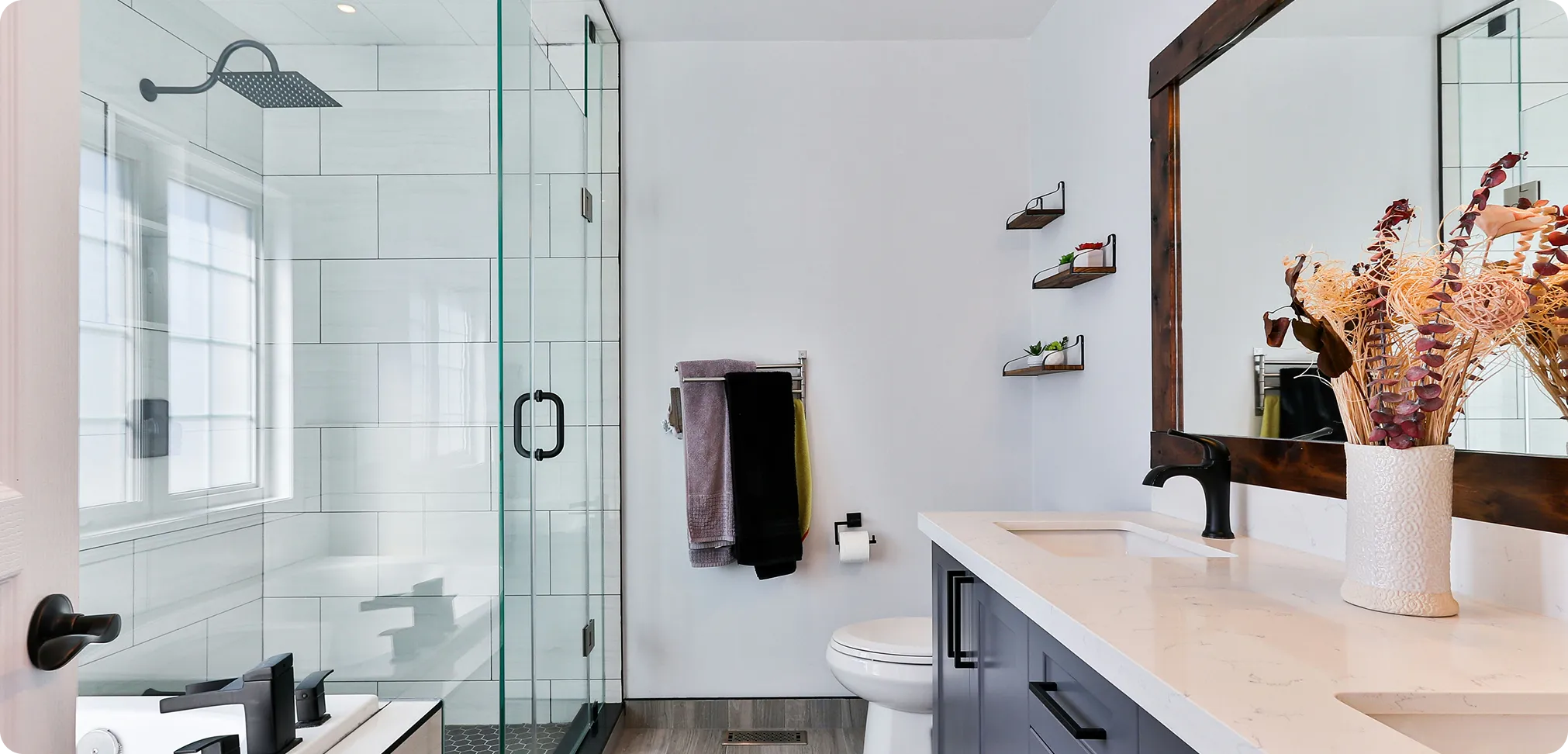
Most regrets after a bathroom remodel Lithia families undertake trace back to a short list of avoidable mistakes, not bad luck. Undersized ventilation, a shower pan that holds water, a vanity that blocks the door, outlets in the wrong place: each is easy to prevent during planning and expensive to fix once tile is set. Here are the errors we see most often and how to sidestep every one of them.
Lithia sits in a part of southeastern Hillsborough County where many homes are newer, often in planned communities, and plenty of others sit on larger rural lots with older construction. Either way, the same Florida realities apply. Bathrooms deal with humidity every day, and a mistake that would be minor in a dry climate tends to show up here as mildew, peeling paint or a soft floor.
Mistake 1: Treating the Exhaust Fan as an Afterthought
Builders often install the smallest fan that meets minimum requirements, and some older fans were ducted into the attic rather than outside. Moist air dumped into an attic can cause mold on roof sheathing, which is a problem you will not see until it is serious. A properly sized fan, ducted to the exterior and controlled by a timer or humidity sensor, is cheap insurance.
If your mirror stays fogged long after a shower, or paint on the ceiling is starting to bubble, the current fan is not doing its job. Fix that in the remodel rather than hoping new tile will solve it.
Mistake 2: Trusting Tile to Keep Water Out
Tile and grout are not waterproof. Water passes through grout lines, so everything behind and under the tile has to be built to handle it. That means a proper substrate, a continuous waterproof membrane and a shower pan with a consistent slope to drain. Before tile goes down, a flood test should confirm the pan holds water without leaking.
Ready to start your project?
Get a free, no-pressure consultation and an honest written quote from a licensed Florida team.
Ask any contractor you interview to describe their waterproofing method in plain terms. Which membrane do they use? Where does it terminate? How do they handle niches, benches and the valve penetration? Confident, specific answers are a good sign.
The same thinking applies outside the shower. The floor around a tub or toilet sees splashes every day, and a bathroom floor laid directly over a damaged subfloor will crack its grout within months. Replacing soft plywood, using an appropriate underlayment and sealing grout properly are all part of doing the floor right, not optional extras.
Mistake 3: Ignoring Clearances
A gorgeous double vanity is a mistake if the door hits it or the toilet ends up wedged against it. Clearances in front of and beside the toilet, the swing of the shower door, and space to stand at the vanity all affect daily comfort. Draw the room to scale, including door swings, before falling in love with any single fixture.
- Check that the entry door and shower door do not collide
- Leave comfortable elbow room on both sides of the toilet
- Confirm drawers in the vanity can open fully past the door casing
- Think about towel bar and hook locations that are reachable from the shower
If space is tight, a well-designed walk-in shower can make a small bath feel larger. Our article on a walk-in shower for a small bathroom shows how.
Mistake 4: Too Little Storage, Wrong Lighting
Removing a linen closet to gain floor space can backfire if there is nowhere to put towels and supplies. Recessed medicine cabinets, vanity drawers with organizers and shower niches recover storage without crowding the room. Plan niche locations before framing so they land between studs and do not interfere with plumbing.
A single overhead fixture casts shadows on your face at the mirror. Layer the lighting: vertical fixtures or sconces on each side of the mirror, a damp-rated fixture in the shower, and general ceiling light. Put each on its own switch so the room works at night as well as in the morning.
Mistake 5: Forgetting the Small Electrical and Material Details
Outlets placed where a hair dryer cord will not reach, no outlet inside a medicine cabinet for an electric toothbrush, a vanity light box that ends up off center over the new mirror: these are small, annoying errors that come from finalizing electrical rough-in before fixtures are chosen. Pick the vanity, mirror and lights first, then locate boxes from those dimensions. All bathroom receptacles need GFCI protection under current code.
Material choices matter in the same practical way. Polished stone floors can be slippery when wet, and very small, light-colored grout lines on a floor will show every footprint. A textured porcelain tile with a mid-tone grout often looks better for longer with less effort.
Mistake 6: Designing Only for Today
A bathroom you remodel now could easily serve you for two decades. Adding blocking in the walls for future grab bars costs very little during construction and saves opening finished tile later. A lower shower threshold, a handheld shower on a slide bar and a comfort-height toilet help everyone, not just older adults. Our guide to aging-in-place bathroom design covers more ideas.
Wall blocking for grab bars is one of the cheapest decisions in a remodel and one of the costliest to add after the tile is finished.
Mistake 7: Hiring for a Bathroom Remodel Lithia Project on Price Alone
A low bid can hide a missing permit, a skipped flood test or allowances so small that change orders are guaranteed. Compare quotes item by item. Each should list demolition, rough plumbing and electrical, waterproofing method, tile labor, fixtures or allowances, permits and disposal. If one quote is much lower, find out which of those pieces is thin or missing.
- Verify the license on the Florida DBPR website
- Ask for proof of liability and workers compensation insurance
- Confirm who pulls the permit and schedules inspections
- Get the workmanship warranty in writing
- Insist on written change orders
Mistake 8: Leaving No Room for Surprises
Once walls and floors come out, older leaks, rotted framing and outdated wiring often appear. Without a contingency built into the budget, these discoveries force a choice between fixing them properly and keeping the finishes you wanted. Setting money aside before work starts takes the pressure off that decision.
Assured Supreme Contracting is a licensed and insured Florida contractor serving Lithia and homeowners across the state. We pull permits, coordinate every trade with one accountable team and back our work with a workmanship warranty. Learn more about our bathroom remodeling services.
To plan a bathroom remodel Lithia homeowners will not need to redo, book a free in-home consultation. We will look at your existing room, flag any red flags early and give you an itemized written quote.
Frequently Asked Questions
Poor moisture management is one of the most common, including undersized or attic-vented exhaust fans and inadequate shower waterproofing. These problems are hidden at first but lead to mold, peeling paint and leaks. Getting ventilation and waterproofing right protects every finish you install on top.
No. Exhaust fans should be ducted to the exterior of the house through a roof or wall cap. Venting moist air into the attic can cause condensation and mold on framing and roof sheathing. If your current fan vents into the attic, correcting it should be part of the remodel.
Ask the contractor which waterproofing system they use, how it is applied and whether they perform a flood test before tile. A proper installation includes a continuous membrane on walls and the pan, sealed penetrations and a pan sloped to the drain. Photos during construction are a reasonable request.
Niches are recessed shelves built into the shower wall to hold toiletries. They are usually placed between studs on an interior wall, away from the shower head spray. Planning their location before framing ensures they are fully waterproofed and do not conflict with plumbing lines.
It depends on your household. Families with young children often value a tub for bathing, and some buyers expect one. If the home has another tub elsewhere, converting the primary bath to a walk-in shower is often a good choice. Consider both current needs and resale.
Blocking is solid wood installed between studs to provide a secure anchor point for grab bars, shelves or heavy accessories. Adding it while walls are open costs very little. Installing it later means removing finished tile or drywall, which is far more disruptive and expensive.
A well-lit bathroom uses layers: task lighting at the mirror, a damp-rated fixture over the shower and general ceiling light. Side lighting at the mirror reduces shadows on the face. Separate switches let you use softer light at night and brighter light when getting ready.
Low quotes may leave out permits, use minimal waterproofing, assume very low fixture allowances or exclude demolition and disposal. Compare each quote line by line and ask about anything missing. The goal is to understand what you are paying for, not just the total.
Most remodels involving plumbing, electrical or structural changes need a permit under the Florida Building Code. Purely cosmetic updates may not. Your contractor should confirm the requirements with the local building department, pull the permit and schedule each of the required inspections.
Common hidden damage includes rotted subfloor near toilets, decayed framing at shower curbs, failed shower pans and mold behind surrounds. Humidity and slow leaks are typical causes. A contingency in your budget allows these issues to be repaired properly when they are uncovered.
Use recessed medicine cabinets, vanities with deep drawers and organizers, shower niches and wall-mounted shelves above the toilet. Tall, narrow linen cabinets can fit in gaps beside a vanity. Planning storage during design avoids cluttered countertops once the room is finished.
Many people find a comfort-height toilet easier to use, especially taller adults and anyone with knee or hip concerns. The seat sits a little higher than a standard model. It is a simple upgrade that improves accessibility without changing the look of the room.