




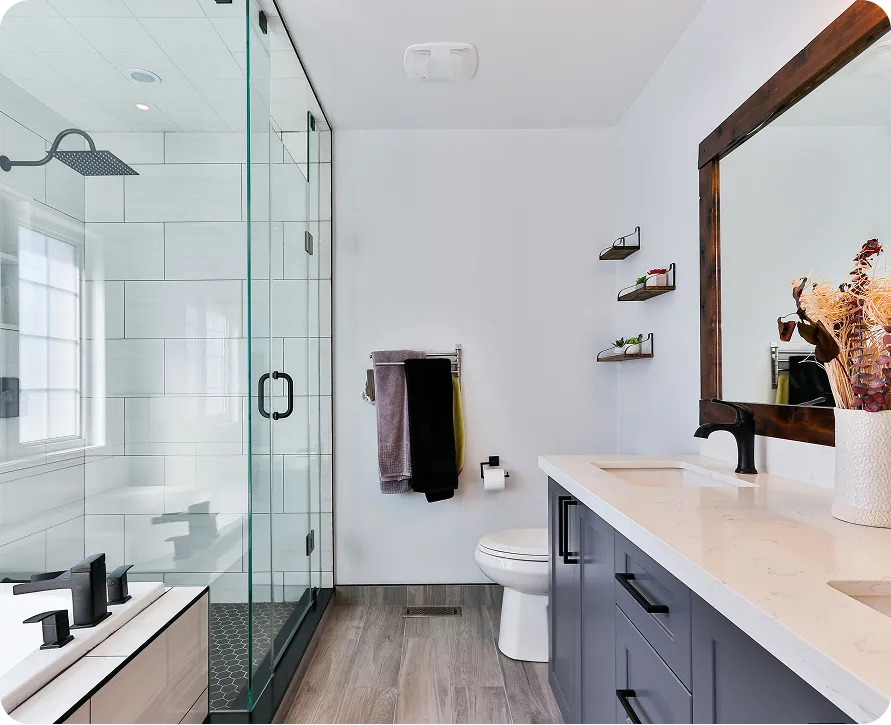
A quality approach to bathroom renovation Jacksonville is one of the most rewarding home improvements you can make. Bathrooms are used every day, they date a home quickly, and good work returns strong value while improving daily life. But bathrooms are also where cutting corners does the most hidden damage, because the critical waterproofing happens behind the tile where you cannot see it until a problem becomes serious. This guide covers what bathroom renovation in Jacksonville involves in Florida, what it costs, and how to choose a professional you can trust.
From a simple refresh to a full renovation, the fundamentals that protect your investment stay the same.
The short version: a bathroom is only as good as what is behind the tile. In Florida's humidity, proper waterproofing separates this bathroom project that lasts from work that invites mold and rot. Hire licensed, insist on a written scope, and never skimp on the hidden work.
Why Waterproofing Is Critical for Bathroom Renovation Jacksonville
Florida's heat and humidity make moisture management the defining challenge of any bathroom renovation project. Improper waterproofing behind the tile and under the shower pan lets water into your walls and floor, where it causes mold, rot, and structural damage, problems that stay invisible until they are costly. Ask any professional specifically how they waterproof; a true pro discusses the shower pan, the membrane, and sealed penetrations without hesitation.
Scope and Options
- Refresh. New fixtures, vanity, mirror, lighting, and paint without moving plumbing.
- Tub-to-shower conversion. Replacing a tub with a modern walk-in shower.
- Full gut renovation. Everything to the studs, new plumbing, waterproofing, tile, and fixtures.
- Accessible design. Curbless showers, grab bars, and ADA-conscious design for aging in place.
Our bathroom remodeling service covers each option, and our bathroom remodel cost in Florida goes deeper on pricing.
Ready to start your project?
Get a free, no-pressure consultation and an honest written quote from a licensed Florida team.
What Bathroom Renovation Costs
The cost of bathroom renovation in Jacksonville depends on size, scope, and materials. A fixture refresh is far less than a tub-to-shower conversion, which is less than a full gut renovation with relocated plumbing and new tile. The accurate number comes from an in-home assessment, not a phone estimate. Compare quotes on scope and especially the waterproofing approach, because a cheaper quote that skimps on the membrane is a future repair bill.
How Long It Takes
A bathroom refresh can be completed in one to two weeks, while a full gut renovation with plumbing changes typically runs three to five weeks. Proper waterproofing requires cure time that cannot be rushed, which a good contractor builds into the schedule rather than skipping to finish faster.
Choosing the Right Professional
Hire a licensed, insured contractor with verifiable local reviews and a clear written scope. Verify the Florida license through the DBPR, ask who pulls the permit (always the contractor), and ask specifically about waterproofing. Our guide on finding a bathroom remodeler covers the vetting process, and our licensed contractor page shows what proper credentials look like.
Serving Florida
We are a licensed, insured contractor serving homeowners across Florida, including Tampa, Clearwater, St. Petersburg, and the Tampa Bay area, plus Broward, Palm Beach, and Miami-Dade counties. Every bathroom we work on is waterproofed properly, permitted, and backed by our warranty. See the areas we serve.
The Bottom Line
Bathroom Renovation Jacksonville transforms a room you use every day and returns real value, but only when the hidden work is done right. Proper waterproofing in Florida's humidity is the difference between work that lasts and work that fails. Hire licensed, insist on a written scope, and never let anyone rush the cure time. A free consultation is the place to start.
Details That Earn Their Keep
Storage planned around what you actually keep in the bathroom beats a generic assumption. A vanity with drawers, a recessed niche, and a medicine cabinet sized to your routine keep the counters clear and the room calm.
A niche built into the shower wall keeps bottles off the floor and the ledges, a small waterproofing detail that pays off in daily tidiness and is far easier to build in now than to add later.
Water pressure and plumbing capacity matter if you are adding a rainfall head, body sprays, or a larger tub. The existing supply lines and water heater have to keep up, and a contractor who checks this before the work starts saves you from a disappointing trickle after everything is installed. The fixtures are only as good as the plumbing feeding them.
A curbless shower erases the threshold that trips people and collects grime, and it makes a small bathroom read larger because the floor runs unbroken into the shower. It also happens to be the most accessible configuration, which future-proofs the room at little added cost when planned in.
Ventilation is not optional in a bathroom, it is the frontline defense against mold. A correctly sized exhaust fan, vented outside and run long enough after each shower, pulls out the moisture that would otherwise feed mold behind the walls and on the ceiling. In a humid climate this single component does more for the long-term health of the room than almost any finish.
Lighting in layers transforms a bathroom from a utility closet into a room you enjoy. Bright, shadow-free light at the mirror for grooming, softer ambient light overhead, and sometimes an accent in a niche together make the space both functional and inviting.
Planning for Comfort
Slip resistance is worth choosing deliberately rather than inheriting from whatever tile looked nice in the showroom. Floors and shower pans meet bare wet feet daily, so a textured or honed surface with the right rating keeps the room safe without sacrificing style.
Storage tends to be an afterthought in bathrooms and then a daily frustration. A vanity with real drawers, a recessed niche in the shower, and a medicine cabinet sized to your needs keep the counters clear and the room calm. Plan storage around what you actually keep in the bathroom rather than a generic assumption.
Glass choice in a shower enclosure shapes the whole room. Frameless panels nearly disappear and keep the eye moving across the space, making a small bathroom feel larger, while framed enclosures cost less and still perform when the budget calls for it.
Heated floors are a modest upgrade with an outsized comfort payoff, and they help the room dry faster too. Planned in while the floor is already open, electric radiant heat adds little disruption and turns a cold tile floor into one of the nicest parts of the morning.
The toilet is easy to overlook in planning, yet comfort height, a quiet soft-close seat, and an efficient flush are daily quality-of-life details worth specifying rather than defaulting to the cheapest builder-grade unit.
Water efficiency is worth building in. Modern low-flow fixtures deliver a strong shower and a clean flush while cutting water use, which shows up on the utility bill and increasingly matters to buyers who look for it.
Flooring that runs continuously under a curbless shower makes a small bathroom feel seamless and larger, and it is also the most accessible configuration, erasing the threshold that trips people and collects grime.
Frequently Asked Questions
It typically costs less than a full remodel because the footprint stays the same, but the price still depends on tile, glass, and fixtures. The waterproofing of the new shower is the part you should never cut.
The pan is the sloped base that directs water to the drain. The membrane is the waterproof layer behind and under the tile. Both have to be installed and tested correctly for the shower to stay leak free.
We stop, show you the damage, explain the repair, and price it in writing before going further. Fixing rot and mold properly is essential before any new waterproofing goes in.
Only if two people regularly get ready at the same time. In a smaller bathroom, a single sink with more counter and drawer space is usually more useful than two cramped sinks.
A refresh can be done in one to two weeks. A full renovation with new plumbing, waterproofing, and tile usually takes three to five weeks, because membranes and mortar need cure time that should never be rushed.
For most primary bathrooms, a walk-in shower is easier to use, easier to clean, and safer as you age. If young children live in the home or buyers in your area expect a tub, keep at least one tub elsewhere in the house.
Porcelain tile is the standard for durability and water resistance. Quality luxury vinyl is a softer, warmer alternative that also handles moisture, which makes it popular for secondary bathrooms.
Ask who pulls the permit, how they waterproof, whether they flood test the shower pan, how long the warranty is, how change orders work, and who is on site each day.
Start with a pressure-balancing or thermostatic valve for safety, then pick heads based on your water pressure and heater capacity. Rainfall heads feel great but need a larger enclosure to contain the spray.
A common rule is one cubic foot per minute of airflow for every square foot of floor, with a minimum of fifty. Larger bathrooms or steam showers need more, and the fan should always vent outdoors.
Run a properly sized exhaust fan that vents outside for at least twenty minutes after every shower, keep grout and caulk sealed, and make sure the waterproofing behind the tile was done correctly in the first place.
Movement in the floor, poor mixing, or water getting through unsealed grout. Using the right grout for the tile, a stable subfloor, and periodic sealing keeps it looking clean for years.