




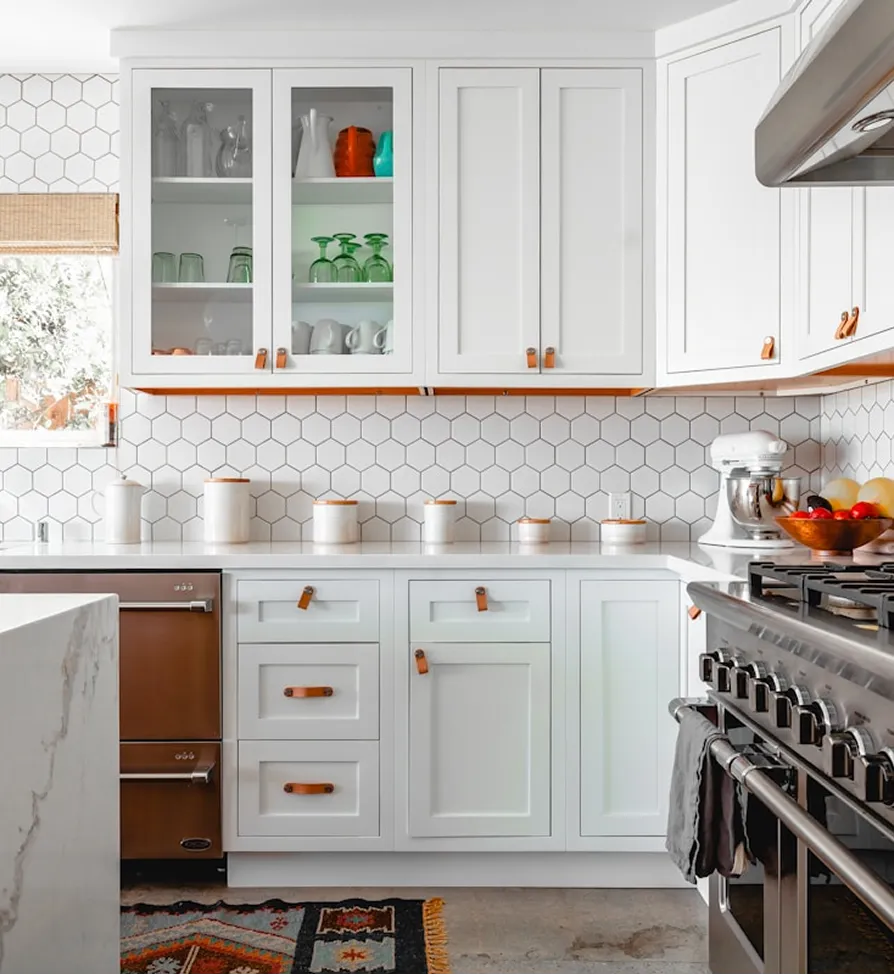
Contractor kitchen cabinet solutions fall into four broad paths: refinish the boxes you have, reface them with new doors and veneer, reconfigure the layout with some new units, or replace everything. Which one makes sense comes down to the condition of the cabinet boxes, how well the current layout works, and what else is changing in the room. Instead of starting with door styles, this article starts with the problems Florida homeowners actually bring to us and matches each one to a practical fix.
Start With a Diagnosis, Not a Catalog
When we walk a kitchen during a consultation, the first thing we check is not the finish. It is the structure. We open the sink base and look for swollen particleboard or soft spots from past leaks. We check whether the face frames are solid hardwood or a thin laminated material. We pull a drawer all the way out to see how the box is joined and whether the slides are worn. We look at how the wall cabinets are fastened and whether they are level.
That inspection tells us which paths are realistic. Sound boxes open up cheaper options. Damaged or poorly built boxes usually do not justify spending money on their surface.
We also ask how the household uses the kitchen. A family that batch cooks on weekends needs different storage than a couple who mostly reheats and entertains. Where do the pots live? Is there a dead corner nobody can reach? Does the trash pull-out sit next to the prep zone or across the room? Those answers often reveal that the real complaint is not the cabinet color at all but the way the space is organized, and that changes the recommendation. A kitchen that looks tired but functions well needs a very different plan than one that looks fine yet frustrates the cook every evening.
Common Cabinet Problems and the Fix That Fits
Here are the situations we run into most often, paired with the approach we typically recommend:
- Dated look, solid boxes, layout works fine: refacing. New doors and drawer fronts, matching veneer over the face frames and exposed sides, plus new hinges and pulls.
- Finish is worn but the door style still appeals to you: professional refinishing or painting, with proper degreasing, sanding and a durable cabinet-grade coating.
- Too little storage or a cramped corner: reconfiguration. Swap a few units for deep drawer bases, add a pantry pull-out, or install a blind corner organizer.
- Water damage under the sink or around the dishwasher: replace the affected base cabinets, fix the leak source, and consider a moisture-resistant sink base material.
- Layout no longer fits how you cook: full replacement, usually alongside a broader remodel that may move plumbing, electrical or walls.
- Doors that sag or will not close: often just new concealed hinges with soft-close and proper adjustment, a small fix with a big daily payoff.
Ready to start your project?
Get a free, no-pressure consultation and an honest written quote from a licensed Florida team.
Contractor Kitchen Cabinet Solutions Compared Side by Side
Each path differs in disruption, lead time and what it can and cannot change.
Refinishing keeps everything in place. It is the least disruptive and fastest, but it cannot fix layout, storage or failing boxes. Quality depends heavily on surface prep, and Florida humidity makes proper curing conditions important.
Refacing keeps the existing boxes and countertops in most cases, so the kitchen stays usable for much of the job. You get a new look and can add soft-close hardware and a few new pieces like a microwave cabinet. It works only when the boxes are solid and the layout is acceptable. Our deeper article on kitchen cabinet refacing walks through the process.
Reconfiguring is a hybrid. You keep most of the run but replace specific units to fix a storage problem. The challenge is matching new doors to old ones, which is why reconfiguration often pairs with refacing so everything matches.
Replacement is the only option that changes everything: box construction, layout, heights, and integration with new countertops and appliances. It also has the longest lead times, especially for custom or semi-custom lines. If you are weighing those tiers, see our comparison of custom versus semi-custom cabinets.
If the boxes are sound and the layout works, change the surfaces. If either one fails, money spent on surfaces is money spent twice.
Installation Details That Separate Good Work From Average
Whichever path you choose, the craft shows up in small decisions. Florida homes, especially older block construction, rarely have perfectly flat walls or level floors. A careful installer handles that rather than ignoring it.
- Base cabinets are set to the high point of the floor and shimmed level, so countertops sit flat and stone does not crack.
- Wall cabinets are fastened into studs or proper blocking, never just drywall anchors.
- Filler strips and end panels are scribed to uneven walls so there are no visible gaps.
- Door overlay stays consistent across the run, with even reveals between doors and drawers.
- Hinges are adjusted so every door closes flush, and soft-close mechanisms are tuned, not just installed.
- Sink bases get a protective liner or moisture-resistant material, given how common slow leaks are.
These are the steps that make cabinets look custom even when they come from a stock line. They are also the steps most often rushed when the installer is paid by the box. For more on the install sequence itself, our cabinet installation walkthrough goes step by step.
Florida Factors Worth Planning Around
Humidity affects cabinet materials and finishes. Solid wood doors can move seasonally, and lower grade particleboard swells if water gets into a cut edge. Plywood boxes and sealed edges hold up better near sinks and dishwashers. Painted finishes need correct primers and enough cure time before doors are rehung.
Supply timing matters too. Stock cabinets may be available quickly, while semi-custom and custom orders often take several weeks or longer. A good contractor orders early, verifies each delivery for damage and correct sizes, and plans demolition so your kitchen is not torn out while you wait on boxes.
Questions to Ask Before You Sign
- Will you inspect the existing boxes and tell me honestly whether refacing or refinishing will last?
- Is the quote itemized, listing cabinets, hardware, fillers, crown, installation and any countertop work separately?
- Who handles plumbing and electrical disconnects and reconnects?
- How are change orders priced and approved?
- Does the work need a permit, and will you pull it?
- What does your workmanship warranty cover?
A contractor who answers those questions clearly is usually one who plans well. You can also verify any Florida contractor's license through the DBPR online lookup before signing.
Assured Supreme Contracting is a licensed and insured Florida contractor offering refacing, reconfiguration and full replacement with one accountable team from start to finish. To find the contractor kitchen cabinet solutions that fit your home and budget, schedule a free in-home consultation and we will assess your existing cabinets and provide an itemized written quote.
Frequently Asked Questions
Open the sink base and look for swelling, soft spots or stains. Check that face frames are solid and firmly attached, drawers are structurally sound, and wall cabinets are level and secure. If the boxes are plywood or solid hardwood frames in good shape, refacing or refinishing is often a reasonable option.
Refacing generally costs less than full replacement because the boxes and often the countertops stay in place. Savings depend on the size of the kitchen, the door style and material, and how many new units are added. It only makes sense when the existing boxes are sound and the layout works.
Yes. Many kitchens gain storage by swapping a few base units for deep drawers, adding a pantry pull-out, fitting a blind corner organizer, or installing roll-out trays. Pairing these changes with refacing keeps the new and old pieces looking consistent.
They can when the job is done correctly. That means thorough degreasing, sanding, a bonding primer, a cabinet-grade topcoat and enough cure time before doors are rehung. Shortcuts in prep or curing are what usually cause peeling and chipping in humid conditions.
Full overlay doors cover almost all of the face frame, leaving small even gaps for a modern look. Partial overlay doors leave more of the frame exposed around each door. The style affects hinge type, appearance and how much frame shows, so it is chosen early in the design.
Floors in many homes are not perfectly level. Shims let the installer set every base cabinet to the same height and plane so countertops sit flat. This matters especially with stone tops, which can crack if supported unevenly. Proper shimming is a sign of careful installation.
Stock cabinets are often available fairly quickly. Semi-custom and custom lines usually take several weeks or more, depending on the manufacturer and options chosen. A contractor should confirm lead times before demolition so your kitchen is not out of service longer than necessary.
Not always. If the countertops are in good condition and match the new look, they can usually stay. If you are changing sink style, adding units or the tops are damaged, replacing them at the same time avoids disrupting new cabinets later.
Scribing means trimming a filler strip, end panel or trim piece so it follows the exact shape of an uneven wall or floor. It eliminates visible gaps where cabinets meet surfaces that are not straight, giving the installation a tight, finished appearance.
Simple like-for-like cabinet replacement often does not require one, but work that changes plumbing, electrical circuits or walls usually does. Rules differ between Florida jurisdictions. A licensed contractor checks local requirements and pulls any permit needed as part of the project.
For most households, yes. Soft-close hinges and drawer slides prevent slamming, reduce wear on doors and frames, and make the kitchen quieter. They can often be added during refacing or as a stand-alone upgrade to existing cabinets with compatible construction.
Plywood boxes with sealed edges resist moisture better than standard particleboard. Some homeowners also choose sink base liners or moisture-resistant materials under the sink. Fixing any slow leak and sealing cut edges matters as much as the material itself in a humid climate.