




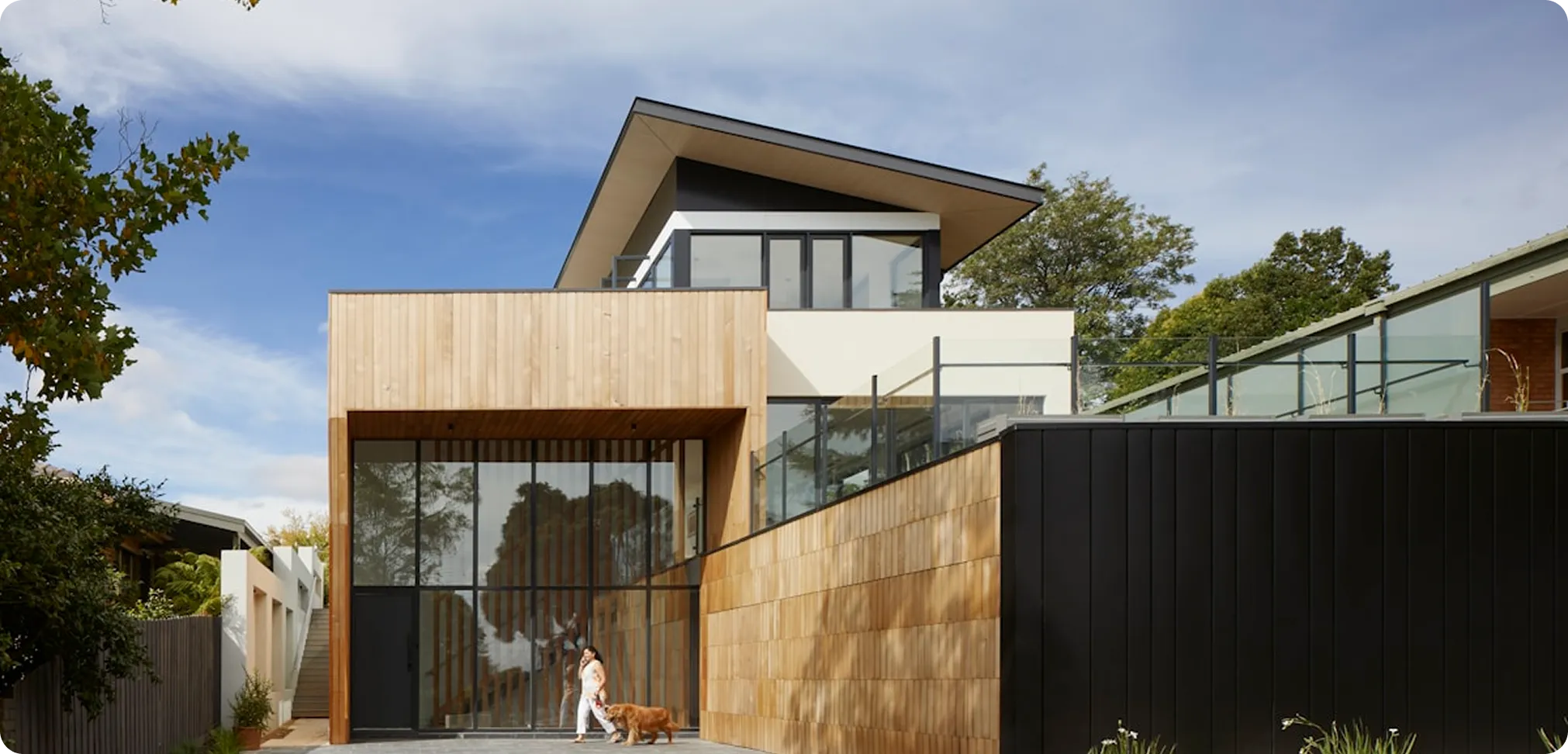
When it comes to roofs, one of the most fundamental distinctions is between flat (or low-slope) and pitched (or sloped) roofs. They look different, they work differently, and they have different strengths, challenges, and ideal uses. Whether you're building, choosing a roof, or just trying to understand your home's roof better, knowing the differences between flat and pitched roofs helps you make informed decisions.
Both flat and pitched roofs are common in South Florida, on different types of buildings and sometimes on different parts of the same building. Each has its place, and neither is simply better, they suit different situations. Understanding how they compare, in how they shed water, their typical materials, maintenance, and best uses, gives you a clearer picture of roofing and helps you understand what's right for a given building.
In this guide we'll compare flat and pitched roofs, how each works, their pros and cons, and where each makes sense. And whenever you want professional guidance on your roof, a free inspection is the place to start.
The short version: Pitched roofs shed water quickly via their slope and use materials like shingles, tile, or metal; they're common on homes. Flat (low-slope) roofs drain slowly and use membrane systems; they're common on commercial buildings and some modern homes. Each suits different buildings, and both need proper installation for our climate.
The Fundamental Difference
Let's start with what fundamentally distinguishes these two roof types, because it explains all their other differences.
The core difference is slope. A pitched roof has a significant slope or angle, while a flat roof has little to no slope (technically usually a slight slope for drainage, hence 'low-slope'). This difference in slope drives everything else, how the roof sheds water, what materials work on it, how it's maintained, and what buildings it suits. The slope isn't just an aesthetic difference; it's functional, determining how the roof handles the single most important thing a roof does: keep water out.
Because of their different slopes, flat and pitched roofs shed water very differently. A pitched roof's slope lets water run off quickly by gravity. A flat roof, with minimal slope, sheds water slowly, relying on careful design and a watertight membrane to manage drainage. This fundamental difference in how they handle water is at the heart of their different materials, maintenance needs, and ideal uses, which we'll explore.
Pitched Roofs: How They Work
Pitched roofs are what most people picture when they think of a roof, the sloped roofs common on houses. Their slope is their defining functional feature.
The slope of a pitched roof lets water and debris run off quickly by gravity, which is a significant advantage for shedding our heavy South Florida rains. Pitched roofs typically use materials like shingles, tile, or metal, which work with the slope to shed water, with each piece overlapping to direct water down and off. This system of overlapping materials on a slope is a time-tested, effective way to keep water out.
Pitched roofs are the standard for homes, and they offer good water shedding, a range of attractive material options, and often long lifespans with quality materials. They also create attic space and can contribute to a home's architectural character. For most residential buildings, the pitched roof is the natural choice, which is why it dominates home roofing. Our guide on the {LINK('best roofing material','/blog/best-roofing-material-south-florida')} covers the options for pitched roofs.
Flat Roofs: How They Work
Flat, or low-slope, roofs work on a different principle, since they don't have the slope to shed water by gravity the way pitched roofs do. They rely on a watertight membrane system.
Because a flat roof has minimal slope, water drains slowly, so the roof relies on a continuous, watertight membrane to keep water out, along with careful design for drainage. Flat roofs use membrane systems like TPO or other single-ply membranes, and modified bitumen, which create a sealed waterproof barrier across the roof. The integrity of this membrane and its seams is what keeps a flat roof watertight, making proper installation critical.
Flat roofs are common on commercial buildings, where their form suits large footprints and rooftop equipment, and on some modern-style homes. They offer usable flat space (for equipment or even rooftop use), a clean modern look, and efficient use of the building's footprint. But because they shed water slowly, they require careful design, quality installation, and attentive maintenance to stay watertight, as our guide on commercial flat roof signs discusses. For commercial and some modern residential buildings, the flat roof is well-suited.
Questions about your roof?
Get a free inspection and professional guidance, whatever type of roof you have.
Flat vs Pitched: Side by Side
Here's how the two compare across the key factors:
| Factor | Pitched Roof | Flat / Low-Slope Roof |
|---|---|---|
| Slope | Significant angle | Little to none |
| Water shedding | Fast, by gravity | Slow, needs membrane |
| Typical materials | Shingle, tile, metal | Membrane (TPO, etc.) |
| Common on | Homes | Commercial, modern homes |
| Key to watertightness | Overlapping materials on slope | Membrane & seam integrity |
| Usable roof space | No (sloped) | Yes (flat) |
Reading across, the two roof types are suited to different purposes. Pitched roofs excel at shedding water and offer attractive material options, making them ideal for homes. Flat roofs offer usable space and a modern look and suit large commercial footprints, but depend on membrane integrity for watertightness. Neither is simply better; each is right for different buildings and situations.
Which Is Better?
A natural question is which roof type is better, but the honest answer is that neither is universally better, they suit different buildings and purposes. The right type depends on the building and situation.
For most homes, a pitched roof is the natural and usually best choice, its excellent water shedding, attractive material options, and proven performance suit residential buildings well. For commercial buildings with large footprints and rooftop equipment, a flat roof is typically the practical choice. And some modern-style homes use flat roofs for their clean aesthetic. So rather than one being better, each is better-suited to particular buildings.
What matters most for either type is proper design, quality materials, and expert installation for our climate. A pitched roof needs quality materials properly installed to shed water and withstand our storms; a flat roof needs a quality membrane expertly installed and maintained to stay watertight. Whichever type a building has, getting it right, with the right approach and a skilled roofer, is what makes it perform. The roof type follows the building; the quality follows the roofer.
The Bottom Line
Flat and pitched roofs differ fundamentally in slope, which drives how they shed water, their materials, maintenance, and ideal uses. Pitched roofs use their slope to shed water quickly with materials like shingle, tile, and metal, making them the natural choice for homes. Flat (low-slope) roofs drain slowly and rely on watertight membrane systems, making them common on commercial buildings and some modern homes.
Neither type is simply better, each suits different buildings and purposes. For most homes, a pitched roof is the natural choice; for commercial buildings, a flat roof is typically practical. What matters most for either is proper design, quality materials, and expert installation for our demanding climate, which is what makes any roof perform and last.
Whatever type of roof your building has, we're glad to provide professional guidance, inspection, and quality work suited to it. Reach out for a free inspection or call us at 561.423.4794.
Why Homeowners Trust Assured Supreme for Roofing
Choosing who works on your roof is as important as any material or design decision, because the quality of the work determines whether your roof actually performs for its full life. Here's what sets a trustworthy contractor apart, and what to look for whoever you hire.
A roof should be installed by a licensed, insured contractor who builds to current South Florida code, including the High-Velocity Hurricane Zone requirements that make a roof genuinely storm-worthy. Licensing means accountability, insurance protects you, and proper code compliance is what stands between your home and the next hurricane. Always verify these before hiring anyone.
Just as important is honesty. The right contractor gives you a straight assessment, a fixed written quote, and clear communication, and recommends what your roof actually needs rather than the biggest possible job. That kind of integrity, backed by a local reputation and real workmanship, is what turns a roof from an expense into a lasting investment in your home's protection.
Planning Your Project the Smart Way
A little planning makes any roofing project go more smoothly and helps you avoid the surprises, delays, and pressure that catch unprepared homeowners off guard. The homeowners who end up happiest are almost always the ones who planned thoughtfully rather than rushing in, so it's worth approaching your project deliberately.
Start by getting a proper assessment and a clear, written, itemized quote rather than a vague verbal estimate, so you know exactly what you're dealing with and what it will cost. Understand the factors driving your specific situation, set a realistic budget with a cushion for the unexpected, and make sure permitting and code compliance are part of the plan, never skipped to hit a lower price, since cut corners cause far bigger costs later.
Then think in terms of long-term value rather than just the upfront number, and prioritize quality and a reputable, licensed contractor over the lowest bid. Your home is a long-term investment, and approaching any work on it thoughtfully, rather than as a rushed bargain hunt, is how you get a result that lasts and that you'll be glad you chose. A good contractor will help you plan well, not pressure you into decisions before you're ready.
Your Next Step in South Florida
If the questions and details in this guide have you thinking about your own home, the most useful thing you can do is turn that thinking into a clear, informed plan, and that starts with an honest professional assessment. There's no substitute for having an experienced, licensed contractor look at your specific situation and give you straight answers.
Every home is different, and general guidance only takes you so far. What looks like one thing from a distance can turn out to be another once a professional takes a proper look, and the right recommendation always depends on the specifics of your home, your goals, and your budget. That's exactly why we offer a free roof inspection with no obligation, so you can make decisions based on your real situation rather than guesswork.
We serve homeowners and businesses across South Florida, from Miami-Dade through Broward and Palm Beach County, with the honest guidance, quality workmanship, and accountability that come from being a licensed, established local contractor. Whether you're ready to move forward or just gathering information, we're happy to help you understand your options. Reach out for a free roof inspection or call us at 561.423.4794, and we'll give you the clear, honest answers you need to take the next step with confidence.
The Assured Supreme Difference
Choosing who to trust with your home is a personal decision, and we don't take it lightly when homeowners choose us. What we offer isn't complicated, it's the combination of things that should be standard but too often aren't: proper licensing and insurance, genuine local roots, honest assessments, fair fixed pricing, quality workmanship, and accountability that doesn't disappear once the job is done.
We believe an informed homeowner makes the best decisions, which is why our guides explain the real factors honestly rather than steering you toward the biggest possible sale. When we assess your home, we tell you what you actually need, even when that's less than you expected, because we're building long-term trust and a local reputation, not chasing a single transaction. That philosophy runs through everything we do, from the smallest repair to a full custom build.
South Florida's climate is demanding, its codes are strict, and its storms are real, which makes the quality and integrity of the work that protects your home matter more here than almost anywhere. Whether your project is large or small, urgent or something you're planning for down the road, our commitment is the same: do right by you and your home, with work that holds up and advice you can trust. That's the standard we hold ourselves to on every job, for every customer, across every corner of South Florida we serve.
Local Expertise That Makes a Difference
There's a real advantage to working with a contractor who knows South Florida specifically, not just the general trade, but the particular demands of building and protecting homes in our corner of the state. The conditions here are unlike almost anywhere else, and that local knowledge shows up in the quality and durability of the work.
Our climate is uniquely demanding: intense year-round sun and UV, heavy seasonal rain, high humidity, coastal salt air, and of course hurricane season. Each of these stresses homes in ways that a contractor unfamiliar with the region might overlook. Add to that some of the strictest building codes in the nation, the High-Velocity Hurricane Zone requirements, and you have an environment where doing things the right way, the local way, genuinely matters for how well your home holds up over the years.
A contractor who works here every day understands all of this as second nature, from the materials and methods that stand up to our conditions to the permitting and code requirements that vary across Miami-Dade, Broward, and Palm Beach County. That local fluency means fewer surprises, work that's built to last in our specific climate, and guidance grounded in real experience with homes like yours. It's one more reason that choosing an established local contractor, rather than an out-of-area operator, protects your investment and your peace of mind.
Serving Homeowners Across South Florida
Assured Supreme Contracting proudly serves homeowners and businesses throughout South Florida, across Miami-Dade, Broward, and Palm Beach County and the communities within them. From coastal homes facing salt air and storm exposure to inland properties dealing with our intense sun and heavy rain, we bring the same standard of quality, honesty, and accountability to every project, wherever you are in the region.
Being a local contractor means we understand the specific challenges of the area you live in, the building requirements that apply, the climate conditions your home faces, and the kind of work that holds up here for the long term. It also means we're part of the same community, with a reputation we intend to keep, which is exactly why we treat every customer's home the way we'd want our own treated. When you choose a local team that's invested in the area, you get a contractor who's still here, still accountable, long after the work is done.
Why Getting This Right Matters
It's easy to treat decisions about your home as just another item on a to-do list, but the work that protects and improves where you live carries real weight. A roof, a window, a remodel, these aren't disposable purchases; they're long-term investments in your comfort, your safety, and the value of your largest asset. Getting them right pays off for years, and getting them wrong can cost far more than the original job ever would have.
That's why we encourage every homeowner to slow down, get informed, and make decisions based on real information rather than pressure or guesswork. The few extra days it takes to get a proper assessment, compare your options honestly, and choose a contractor you trust are nothing compared to the years you'll live with the result. An informed, unhurried decision is almost always a better one, and it's the kind of decision we want every customer to feel good about long after the work is finished.
Questions? We're Happy to Help
If you have questions after reading this, that's a good sign, it means you're taking the decision seriously, which is exactly the right approach. There's no such thing as a silly question when it comes to your home, and a good contractor should be glad to answer them rather than rushing you toward a signature. We certainly are.
Whether you want a second opinion, a clearer explanation of your options, or simply an honest assessment of where things stand, we're here to help with no pressure and no obligation. The best decisions come from good information and a contractor you trust, and we'd be glad to provide both. Reach out whenever you're ready, by phone at 561.423.4794 or through our contact page, and we'll give you straight, helpful answers grounded in real experience with homes across South Florida.
A detailed written contract is the single best protection you have on any remodel. It should name the scope, the materials, the timeline, the payment schedule tied to milestones, and how changes are handled. A contractor who welcomes putting all of this in writing is showing you how they will treat you once the work begins.
A walkthrough at the start and a punch list at the end bookend a professional job. Documenting the starting condition and then methodically closing out every small item at completion is how a project ends cleanly rather than trailing loose ends.
A realistic timeline is a sign of an honest contractor. Material lead times, inspection schedules, and the simple reality of hidden conditions in an older home all affect the calendar. Someone who promises an implausibly fast finish is either inexperienced or telling you what you want to hear, and both cost you later.
Communication cadence is worth agreeing on before the first day. Knowing who your point of contact is, how often you will get updates, and how decisions get made prevents the slow erosion of trust that happens when a homeowner feels left in the dark. The best projects run on clear, regular communication, not just good carpentry.
Change orders are a normal part of most projects, but how they are handled separates a smooth job from a contentious one. A clear written process for pricing and approving changes before work proceeds protects both sides.
Material selections made early and ordered promptly keep the calendar honest, because the longest delays on most remodels come from waiting on something that was decided late. A good contractor pushes you to lock choices before they become the bottleneck.
Think about how you will live through the project. Which rooms stay usable, how dust is contained, where materials are staged, these practical questions shape your daily life for weeks. A contractor who walks you through the logistics up front is one who has done this enough times to respect what it is like on your side.
Permits exist to protect you, not to slow you down. Permitted, inspected work means a neutral third party has confirmed the structural, electrical, and plumbing work meets code, which protects your insurance and your resale value. A contractor who offers to skip the permit is offering to transfer that risk onto you.
Protecting the parts of your home that are not being renovated, floors, furniture, HVAC returns, is a sign of a crew that respects your space. Dust control and daily cleanup are not luxuries; they are the difference between a livable project and a miserable one.
Frequently Asked Questions
The core difference is slope. A pitched roof has a significant angle that sheds water quickly by gravity, using materials like shingle, tile, or metal. A flat (low-slope) roof has little to no slope, drains slowly, and relies on a watertight membrane system. This difference in slope drives their different materials, maintenance, and ideal uses.
Neither is universally better, they suit different buildings. For most homes, a pitched roof is the natural choice, with excellent water shedding and attractive materials. For commercial buildings with large footprints and rooftop equipment, a flat roof is typically practical. Some modern homes use flat roofs for the aesthetic. The right type depends on the building and situation.
Flat and low-slope roofs use membrane systems that create a continuous watertight barrier, since they can't shed water by slope alone. Common options include single-ply membranes like TPO and modified bitumen. The integrity of the membrane and its seams is what keeps a flat roof watertight, making quality installation and maintenance critical.
Pitched roofs typically use shingle, tile, or metal, materials that work with the slope to shed water, with each piece overlapping to direct water down and off. Each has its own strengths in cost, lifespan, and appearance. The slope plus overlapping materials is a time-tested, effective system for keeping water out, well-suited to residential homes.
Flat roofs suit commercial buildings because their form works well for large building footprints and accommodates rooftop equipment like HVAC units. They offer usable flat space and efficient use of the footprint. Because they drain slowly, they require quality membrane installation and attentive maintenance, but for large commercial structures, they're typically the practical choice.
Flat roofs shed water slowly, so they depend entirely on the membrane and its seams staying watertight, and seams and drainage are where flat-roof leaks typically start. With quality installation and proper maintenance, a flat roof performs well, but it requires more attention to drainage and membrane integrity than a pitched roof, whose slope sheds water naturally. Proper installation is key for either type.