



In South Florida, hurricane resistance isn't an optional upgrade, it's fundamental to a home that can protect you through the storms we face. Whether you're building a new home or strengthening an existing one, understanding what makes a home hurricane-resistant helps you create a home that stands up to our most severe weather. And in our region, a hurricane-resistant home isn't just safer, it's also more insurable and more valuable.
The good news is that we know a great deal about how to build homes that survive hurricanes, knowledge hard-won from past storms and embodied in our строгие building codes. A home built or upgraded with these principles is dramatically more resilient than older or substandard construction. Understanding the key elements helps you build new for resilience or prioritize the upgrades that matter most for an existing home.
In this guide we'll explain what makes a home hurricane-resistant, the key elements from the roof to the openings to the structure, and how to build or strengthen for our climate. And whenever you want to build or fortify a hurricane-resistant home, a free consultation is the place to start.
The short version: A hurricane-resistant home protects its envelope, the roof, windows, and doors, so wind can't get in and pressurize it, and is structurally tied together to resist uplift. Building to current HVHZ code with a strong roof, impact-rated openings, and solid connections is what creates real resilience.
How Homes Fail in Hurricanes
To understand what makes a home hurricane-resistant, it helps to understand how homes fail in hurricanes, because resilience is essentially about preventing these failure modes.
A leading way homes suffer catastrophic damage is through a breach of the building envelope. When a window or door fails, from wind pressure or flying debris, wind enters the home and pressurizes it. That internal pressure then pushes outward and upward against the walls and roof, and can blow the roof off or push out walls. A single breached opening can cascade into the loss of the whole home. Keeping the envelope intact is therefore central to resilience.
Roof failure is another major mode, whether from the covering being torn off or the roof structure lifting under wind uplift. And inadequate structural connections, where the roof, walls, and foundation aren't tied together strongly enough, allow the home to come apart under hurricane forces. Understanding these failure modes, envelope breaches, roof failure, and weak connections, points directly to what makes a home resistant: protecting the envelope, securing the roof, and tying the structure together.
The Roof: Your First Line of Defense
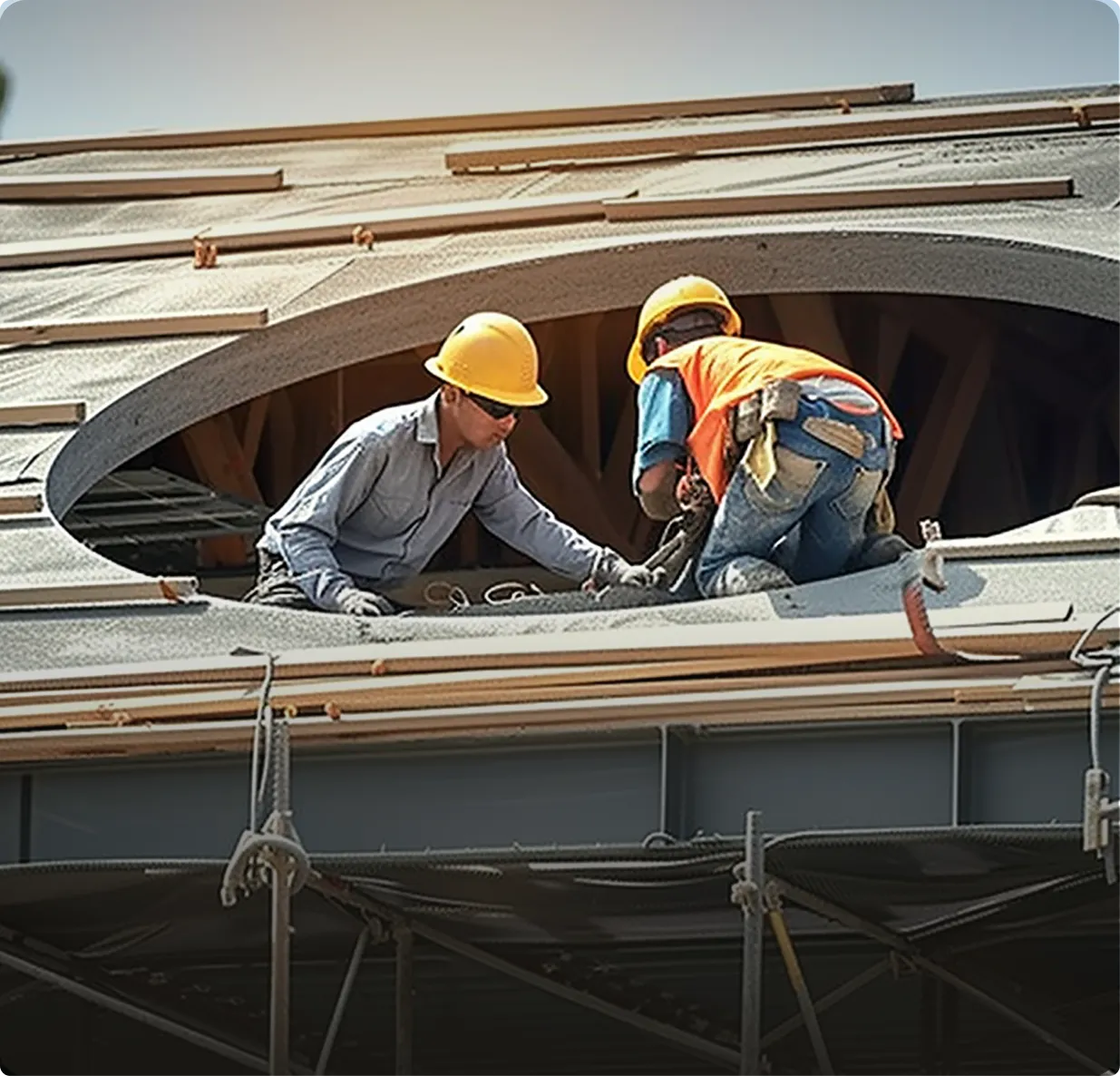
The roof is your home's primary defense against hurricanes, and it's central to hurricane resistance. A strong, properly built roof is foundational to a resilient home.
A hurricane-resistant roof has several elements. The roof covering must be rated and installed to withstand high winds. The roof must be properly fastened and attached so it resists the powerful uplift forces of hurricane winds. And a sealed secondary water barrier provides backup protection, keeping water out even if the covering is compromised. Together these make a roof that stays on and keeps water out in a storm.
This is why a modern, code-compliant roof is so much more storm-resistant than an older one, and why a new roof is one of the most important hurricane-resistance upgrades for an existing home. Building or replacing your roof to current HVHZ standards, with proper attachment, a quality wind-rated covering, and a secondary water barrier, is foundational to a hurricane-resistant home. The roof is where resilience starts.
Protecting the Openings
Because envelope breaches are such a major failure mode, protecting your home's openings, windows and doors, is essential to hurricane resistance. This is often where the difference between a home that survives and one that doesn't is decided.
Windows and doors must be able to withstand hurricane winds and flying debris without failing, which means impact windows and impact-rated doors, or properly deployed hurricane shutters. These keep the openings intact, preventing the wind intrusion and pressurization that destroys homes. Don't forget the garage door, often a home's largest and most vulnerable opening, a wind-rated garage door is an important part of the picture.
Protecting every opening matters, because the envelope is only as strong as its weakest point, a single unprotected opening can be the breach that lets the storm in. This is why comprehensive protection of all openings is so important for true hurricane resistance. Our guide comparing impact windows and shutters can help you choose how to protect your openings. Together with a strong roof, protected openings keep the envelope intact, the core of a resilient home.
Want a more hurricane-resistant home?
Get a free consultation on building new for resilience or strengthening your existing home.
Structural Connections and Integrity
The third pillar of hurricane resistance is the home's structural integrity, how well the roof, walls, and foundation are tied together to resist the forces of a hurricane as a unified structure.
In a hurricane, powerful forces try to pull the home apart, lifting the roof, pushing on the walls. A hurricane-resistant home has strong connections throughout, the roof securely tied to the walls (proper roof-to-wall connections), the walls to the foundation, so the whole structure stays together and resists these forces. These connections are part of what current building codes require, and they're a key reason modern code-compliant homes perform so much better than older ones.
For new construction, building these strong connections in from the start is straightforward and fundamental, it's part of building to current code. For existing homes, some structural connections can be strengthened, and a wind mitigation inspection can identify your home's current features and where improvements are possible. Strong structural connections, tying the home together as one resilient unit, complete the picture of a hurricane-resistant home alongside the roof and protected openings.
Building New for Resilience
If you're building a new home, you have the opportunity to design hurricane resistance in from the ground up, which is the ideal way to achieve it. A new home built to current standards is hurricane-resistant by design.
Building new to current HVHZ code means the roof, openings, and structural connections are all built to today's demanding standards from the start, no retrofitting needed. You can go further, choosing especially durable materials and systems, designing for our climate throughout, and incorporating the full range of resilience features as an integrated whole. A custom home built for our climate is both your dream home and a fortress against storms. Our guide on building a custom home covers the process.
This integrated, ground-up approach is the most effective way to achieve hurricane resistance, because every element is designed and built for it together, rather than added piecemeal. For anyone building new in South Florida, prioritizing resilience in the design is one of the smartest things you can do, it creates a home that protects you, insures better, and holds its value in our storm-prone market. Building new is the ideal opportunity to get hurricane resistance right from the start.
Strengthening an Existing Home
If you have an existing home, you can significantly improve its hurricane resistance through targeted upgrades, focusing on the elements that matter most. You don't have to rebuild to gain real resilience.
The highest-impact upgrades are typically a new code-compliant roof (addressing the primary defense), impact windows and doors or shutters (protecting the openings), and, where possible, strengthening structural connections. Prioritizing these, especially the roof and openings, delivers the most resilience for your investment. A wind mitigation inspection can assess your home's current features and help you prioritize.
These upgrades not only make your home safer, they also improve your insurance situation through wind mitigation credits and can enhance your home's value and insurability in our market, so they deliver multiple benefits. Strengthening an existing home is a worthwhile investment in safety, savings, and value. You can approach it comprehensively or prioritize the most important upgrades as budget allows, either way meaningfully improving your home's resilience.
The Bottom Line
A hurricane-resistant home comes down to three things: a strong, properly built roof as the first line of defense; protected openings, windows, doors, and garage, that keep the envelope intact; and solid structural connections that tie the home together to resist the forces of a storm. Building or upgrading these to current HVHZ standards is what creates real resilience against the hurricanes we face.
Whether you're building new, where you can design resilience in from the ground up as an integrated whole, or strengthening an existing home through targeted upgrades like a new roof and impact windows, you can create a home that genuinely protects you in a storm. And in South Florida, a hurricane-resistant home isn't just safer, it's more insurable and more valuable too.
Whether you want to build a hurricane-resistant home or strengthen your existing one, we'd be glad to help you create a home built to withstand our climate. Reach out for a free consultation or call us at 561.423.4794.
Choosing the Right Builder for Your Project
For new construction, the builder you choose shapes everything, the quality, the timeline, the budget, and your experience along the way. Here's what to look for in a builder you can trust with something this significant.
Licensing, insurance, and genuine experience with projects like yours are the foundation. Beyond that, look for a builder who manages the entire process as one accountable team, from design and permitting through construction and final walkthrough, so you have one point of responsibility rather than a fragmented project with no one truly in charge.
Clear communication, transparent pricing, and honest guidance matter enormously on a project of this scale and length. The right builder keeps you informed, builds to code and to last, and stands behind their work. That combination of credentials, accountability, and integrity is what turns the major undertaking of building into a result you'll enjoy for decades.
Planning Your Project the Smart Way
A little planning makes any construction project go more smoothly and helps you avoid the surprises, delays, and pressure that catch unprepared homeowners off guard. The homeowners who end up happiest are almost always the ones who planned thoughtfully rather than rushing in, so it's worth approaching your project deliberately.
Start by getting a proper assessment and a clear, written, itemized quote rather than a vague verbal estimate, so you know exactly what you're dealing with and what it will cost. Understand the factors driving your specific situation, set a realistic budget with a cushion for the unexpected, and make sure permitting and code compliance are part of the plan, never skipped to hit a lower price, since cut corners cause far bigger costs later.
Then think in terms of long-term value rather than just the upfront number, and prioritize quality and a reputable, licensed contractor over the lowest bid. Your home is a long-term investment, and approaching any work on it thoughtfully, rather than as a rushed bargain hunt, is how you get a result that lasts and that you'll be glad you chose. A good contractor will help you plan well, not pressure you into decisions before you're ready.
Your Next Step in South Florida
If the questions and details in this guide have you thinking about your own home, the most useful thing you can do is turn that thinking into a clear, informed plan, and that starts with an honest professional assessment. There's no substitute for having an experienced, licensed contractor look at your specific situation and give you straight answers.
Every home is different, and general guidance only takes you so far. What looks like one thing from a distance can turn out to be another once a professional takes a proper look, and the right recommendation always depends on the specifics of your home, your goals, and your budget. That's exactly why we offer a free consultation about your build with no obligation, so you can make decisions based on your real situation rather than guesswork.
We serve homeowners and businesses across South Florida, from Miami-Dade through Broward and Palm Beach County, with the honest guidance, quality workmanship, and accountability that come from being a licensed, established local contractor. Whether you're ready to move forward or just gathering information, we're happy to help you understand your options. Reach out for a free consultation about your build or call us at 561.423.4794, and we'll give you the clear, honest answers you need to take the next step with confidence.
The Assured Supreme Difference
Choosing who to trust with your home is a personal decision, and we don't take it lightly when homeowners choose us. What we offer isn't complicated, it's the combination of things that should be standard but too often aren't: proper licensing and insurance, genuine local roots, honest assessments, fair fixed pricing, quality workmanship, and accountability that doesn't disappear once the job is done.
We believe an informed homeowner makes the best decisions, which is why our guides explain the real factors honestly rather than steering you toward the biggest possible sale. When we assess your home, we tell you what you actually need, even when that's less than you expected, because we're building long-term trust and a local reputation, not chasing a single transaction. That philosophy runs through everything we do, from the smallest repair to a full custom build.
South Florida's climate is demanding, its codes are strict, and its storms are real, which makes the quality and integrity of the work that protects your home matter more here than almost anywhere. Whether your project is large or small, urgent or something you're planning for down the road, our commitment is the same: do right by you and your home, with work that holds up and advice you can trust. That's the standard we hold ourselves to on every job, for every customer, across every corner of South Florida we serve.
Local Expertise That Makes a Difference
There's a real advantage to working with a contractor who knows South Florida specifically, not just the general trade, but the particular demands of building and protecting homes in our corner of the state. The conditions here are unlike almost anywhere else, and that local knowledge shows up in the quality and durability of the work.
Our climate is uniquely demanding: intense year-round sun and UV, heavy seasonal rain, high humidity, coastal salt air, and of course hurricane season. Each of these stresses homes in ways that a contractor unfamiliar with the region might overlook. Add to that some of the strictest building codes in the nation, the High-Velocity Hurricane Zone requirements, and you have an environment where doing things the right way, the local way, genuinely matters for how well your home holds up over the years.
A contractor who works here every day understands all of this as second nature, from the materials and methods that stand up to our conditions to the permitting and code requirements that vary across Miami-Dade, Broward, and Palm Beach County. That local fluency means fewer surprises, work that's built to last in our specific climate, and guidance grounded in real experience with homes like yours. It's one more reason that choosing an established local contractor, rather than an out-of-area operator, protects your investment and your peace of mind.
Serving Homeowners Across South Florida
Assured Supreme Contracting proudly serves homeowners and businesses throughout South Florida, across Miami-Dade, Broward, and Palm Beach County and the communities within them. From coastal homes facing salt air and storm exposure to inland properties dealing with our intense sun and heavy rain, we bring the same standard of quality, honesty, and accountability to every project, wherever you are in the region.
Being a local contractor means we understand the specific challenges of the area you live in, the building requirements that apply, the climate conditions your home faces, and the kind of work that holds up here for the long term. It also means we're part of the same community, with a reputation we intend to keep, which is exactly why we treat every customer's home the way we'd want our own treated. When you choose a local team that's invested in the area, you get a contractor who's still here, still accountable, long after the work is done.
Why Getting This Right Matters
It's easy to treat decisions about your home as just another item on a to-do list, but the work that protects and improves where you live carries real weight. A roof, a window, a remodel, these aren't disposable purchases; they're long-term investments in your comfort, your safety, and the value of your largest asset. Getting them right pays off for years, and getting them wrong can cost far more than the original job ever would have.
That's why we encourage every homeowner to slow down, get informed, and make decisions based on real information rather than pressure or guesswork. The few extra days it takes to get a proper assessment, compare your options honestly, and choose a contractor you trust are nothing compared to the years you'll live with the result. An informed, unhurried decision is almost always a better one, and it's the kind of decision we want every customer to feel good about long after the work is finished.
Questions? We're Happy to Help
If you have questions after reading this, that's a good sign, it means you're taking the decision seriously, which is exactly the right approach. There's no such thing as a silly question when it comes to your home, and a good contractor should be glad to answer them rather than rushing you toward a signature. We certainly are.
Whether you want a second opinion, a clearer explanation of your options, or simply an honest assessment of where things stand, we're here to help with no pressure and no obligation. The best decisions come from good information and a contractor you trust, and we'd be glad to provide both. Reach out whenever you're ready, by phone at 561.423.4794 or through our contact page, and we'll give you straight, helpful answers grounded in real experience with homes across South Florida.
Communication cadence is worth agreeing on before the first day. Knowing who your point of contact is, how often you will get updates, and how decisions get made prevents the slow erosion of trust that happens when a homeowner feels left in the dark. The best projects run on clear, regular communication, not just good carpentry.
Change orders are a normal part of most projects, but how they are handled separates a smooth job from a contentious one. A clear written process for pricing and approving changes before work proceeds protects both sides.
Warranty terms in writing tell you how a contractor views the years after the check clears. A real workmanship warranty, clearly stated, is a promise that they expect to stand behind the work and be reachable when you need them.
The lowest bid is rarely the cheapest project. A quote that comes in far under the others usually means something has been left out of the scope or will reappear later as change orders. Comparing bids line by line, on scope rather than the bottom number, is how you find real value instead of a tempting trap.
A dedicated project manager or single point of contact keeps a multi-trade job coherent. When the electrician, the plumber, and the finish carpenter all answer to one coordinator, the schedule holds and the details do not fall through the cracks.
Think about how you will live through the project. Which rooms stay usable, how dust is contained, where materials are staged, these practical questions shape your daily life for weeks. A contractor who walks you through the logistics up front is one who has done this enough times to respect what it is like on your side.
A realistic timeline is a sign of an honest contractor. Material lead times, inspection schedules, and the simple reality of hidden conditions in an older home all affect the calendar. Someone who promises an implausibly fast finish is either inexperienced or telling you what you want to hear, and both cost you later.
Frequently Asked Questions
Three things: a strong, properly built roof as the first line of defense; protected openings, impact windows, impact-rated or shuttered doors, and a wind-rated garage door, that keep the envelope intact; and solid structural connections tying the roof, walls, and foundation together to resist storm forces. Building or upgrading these to current HVHZ standards creates real resilience.
A leading failure mode is a breach of the building envelope: when a window or door fails, wind enters and pressurizes the home, pushing the roof off or walls out. Roof failure, from the covering tearing off or the structure lifting under uplift, is another. So are weak structural connections that let the home come apart. Resilience means preventing these failures.
Yes, the roof is your home's primary defense and central to hurricane resistance. A resilient roof has a wind-rated covering, proper fastening to resist uplift, and a sealed secondary water barrier. This is why a modern code-compliant roof is far more storm-resistant than an older one, and why a new roof is one of the most important resilience upgrades for an existing home.
Focus on the highest-impact upgrades: a new code-compliant roof (the primary defense), impact windows and doors or shutters (protecting the openings), and, where possible, strengthening structural connections. A wind mitigation inspection can assess your home and help prioritize. These upgrades also improve your insurance through wind mitigation credits and enhance your home's value.
Because a breached opening is a leading cause of catastrophic damage. When a window or door fails, wind enters and pressurizes the home, which can blow off the roof or push out walls. The envelope is only as strong as its weakest opening, so protecting every window, door, and the garage with impact-rated products or shutters is essential to keeping the home intact.
Building new lets you design resilience in from the ground up, with the roof, openings, and structural connections all built to current HVHZ standards as an integrated whole, the most effective way to achieve hurricane resistance. For existing homes, targeted upgrades like a new roof and impact windows deliver real resilience without rebuilding. Both approaches can create a genuinely storm-resistant home.