




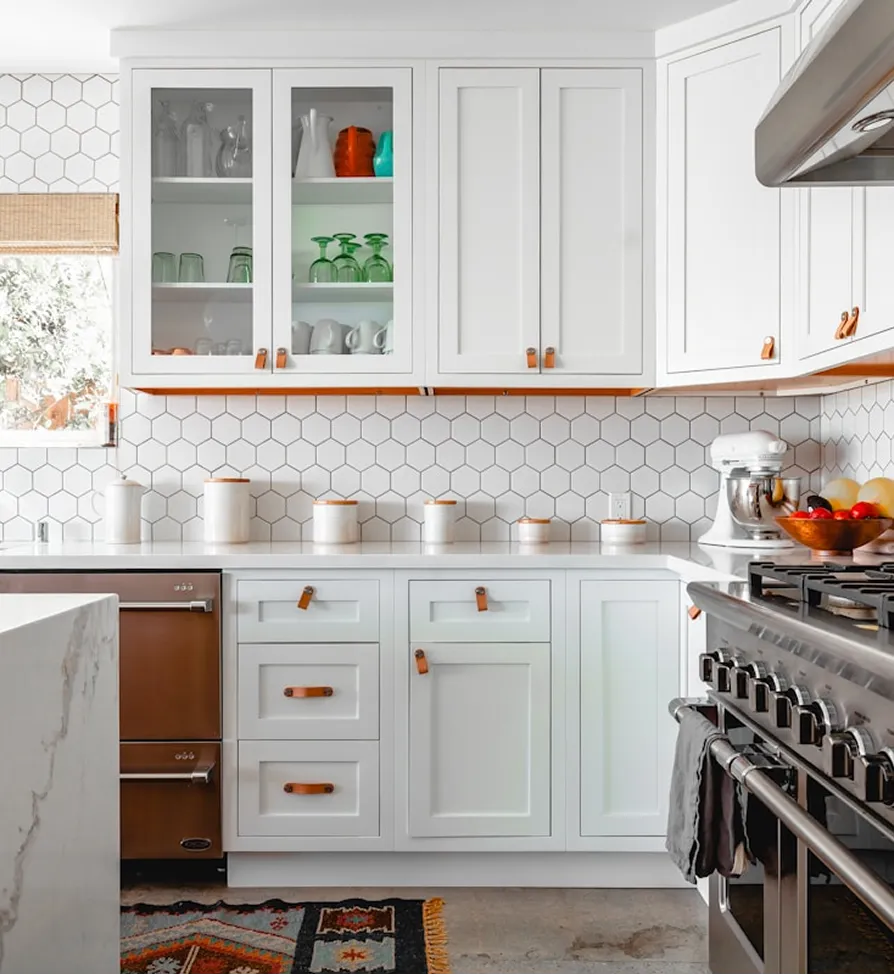
What actually makes cabinetry luxurious? Shoppers looking at luxury cabinets Lakewood Ranch showrooms display often focus on the door style and the paint color, yet the qualities that justify a premium price are mostly structural: the box material, how drawers are joined, how doors sit in the frame, how the finish is built up, and how carefully everything is fitted to the walls of your particular house. Those details decide whether the cabinets still look crisp after fifteen Florida summers.
This article compares high-end construction with the mid-range cabinetry most kitchens receive, piece by piece, so you can judge where extra spending delivers real value and where it is mostly a label.
The box: plywood, MDF and particleboard
Every cabinet starts as a box (the carcass). Entry-level lines commonly use particleboard with a melamine skin. It is stable and inexpensive, but it swells permanently if water gets into a raw edge, which is a real concern under a sink or beside a dishwasher in a humid climate.
Premium lines generally use furniture-grade plywood for the sides, bottoms and backs, often with thicker panels than stock cabinetry. Plywood holds screws better, resists sagging under heavy stone countertops and tolerates the occasional leak far more gracefully. Some makers pair plywood boxes with MDF door panels, which is a sensible combination: MDF takes paint beautifully and stays flat, while plywood carries the structural load.
Drawers, slides and hinges
Pull out a drawer in any showroom and look at the corners. Stapled or glued butt joints signal a budget build. Dovetailed solid hardwood boxes, assembled without fasteners, are a hallmark of higher-end work and can carry heavy pots for decades.
- Slides: full-extension, undermount slides with soft-close let you reach the back of the drawer and hide the hardware from view.
- Hinges: concealed hinges with integrated soft-close and three-way adjustment allow an installer to fine-tune door gaps after the countertop goes on.
- Load ratings: deep drawers for cookware benefit from slides rated for heavier loads than a standard utensil drawer.
- Interior fittings: dovetailed inner drawers, spice pull-outs and peg systems are where luxury lines often differentiate themselves.
Inset, full overlay and partial overlay
Overlay describes how the door sits relative to the cabinet face. Partial overlay, common in older or budget kitchens, leaves a wide strip of the face frame visible. Full overlay covers nearly all of it for a cleaner look. Inset doors sit flush inside the face frame, with a narrow, even reveal all the way around.
Inset is widely seen as the most refined style, and it is also the least forgiving. The face frame must be square, the doors must be precisely sized, and seasonal movement in wood has to be anticipated. Florida humidity amplifies that last point, so a maker offering inset should be able to explain how they finish and seal wood to minimize movement. If a showroom cannot answer that question clearly, consider full overlay instead.
Ready to start your project?
Get a free, no-pressure consultation and an honest written quote from a licensed Florida team.
Finishes That Separate Luxury Cabinets Lakewood Ranch Buyers Notice
A painted door that looks perfect in the showroom can chip, yellow or show hairline cracks at the joints within a couple of years if the finish system is thin. High-end finishes are typically catalyzed lacquers or conversion varnishes, sprayed in multiple coats and cured in a controlled environment. They resist moisture, cleaning chemicals and the abrasion of daily use far better than a single coat of paint applied on site.
Stained wood offers its own range: rift-sawn white oak for a linear, contemporary grain, walnut for warmth, or quarter-sawn species for figure. Glazes, hand-rubbed effects and two-tone schemes (a darker island against lighter perimeter cabinets, for example) are popular, but each step adds labor and therefore cost.
Custom fit and installation craft
Luxury cabinetry is only luxurious once it is installed well. Walls are rarely flat and floors are rarely level, even in newer construction. Skilled installers use shims to set a dead-level base line, scribe filler strips and end panels to follow the wall exactly, and align door reveals so every gap matches. Crown molding, light rail, toe kicks and appliance panels all need to line up across runs.
Integrated appliances deserve special mention. Panel-ready refrigerators and dishwashers require precise openings and careful panel mounting. A small error is very visible when the appliance is meant to disappear into the cabinetry. For more on how the installation process unfolds, see our article on kitchen cabinet installation.
Custom or high-end semi-custom?
Not every premium kitchen needs fully custom cabinetry. Many semi-custom lines offer plywood boxes, dovetail drawers, upgraded finishes and a wide range of sizes and modifications. Fully custom work makes most sense when the room has unusual dimensions, when you want furniture-style pieces, or when you need sizes and details no catalog offers. Our comparison of custom versus semi-custom cabinets goes deeper on that decision.
Spend on the parts you touch and the parts you cannot easily replace: boxes, drawer construction, hinges and finish. Decorative extras are easier to add later.
Details that finish the look
Small decisions add up in a premium kitchen. Decorative hardware should be chosen for weight and feel in the hand, not just appearance, and placed consistently from door to door. Under-cabinet lighting looks best when it is planned before production, so a recessed channel or light rail can hide the fixtures and the wiring is roughed in before drywall closes. Interior lighting in glass-front uppers, a matching toe kick finish and finished end panels on exposed sides all signal care.
Coordinate the countertop edge profile and backsplash height with the cabinet design too. A thick mitered stone edge or a full-height slab backsplash changes how the uppers and hood are positioned, and those relationships are much easier to resolve on paper than on the wall.
Lead times and planning
High-end cabinetry usually takes longer to produce than stock lines. Custom finishes, inset construction and special sizes all add time. Plan the design, approve shop drawings, and confirm the delivery window before the existing kitchen is demolished. Countertops are templated only after cabinets are installed, so any cabinet delay ripples through the rest of the schedule.
It also helps to finalize appliances before cabinet drawings are approved. Changing a range width or switching to a panel-ready refrigerator after production starts can mean remaking boxes, which costs both money and weeks.
Questions worth asking any cabinet supplier
- What material are the boxes, shelves and backs made from, and how thick are they?
- How are drawer boxes joined, and what slides are standard?
- What finish system is used, and how is it cured?
- How do inset doors handle humidity in your experience?
- What warranty covers the cabinets themselves, separate from installation?
Assured Supreme Contracting is a licensed and insured Florida contractor that pulls permits for kitchen remodels, coordinates cabinetry, countertops and trades through one accountable team, and stands behind its installation with a workmanship warranty. If you are comparing luxury cabinets Lakewood Ranch suppliers and want a crew that installs them with care, book a free in-home consultation and we will provide an itemized written quote.
Frequently Asked Questions
In most Florida kitchens, yes. Plywood holds fasteners better, resists sagging under heavy countertops and recovers far better than particleboard if a sink or dishwasher leaks. The difference is invisible once the doors are on, but it matters over the life of the kitchen, especially in the sink base and other areas exposed to moisture.
Inset cabinetry places doors and drawer fronts flush inside the face frame with a narrow, consistent gap. It can work well in humid climates when the wood is properly dried, sealed on all sides and finished with a durable coating. Because gaps are small, seasonal movement shows more easily, so maker quality and installation precision are essential.
Ask what finish system the manufacturer uses. Catalyzed lacquers and conversion varnishes applied in multiple sprayed coats and cured in a controlled shop tend to resist chipping and moisture. Look closely at showroom samples for crisp edges and smooth coverage at the joints, and ask how the manufacturer handles touch-ups if a door gets damaged.
They make the kitchen quieter and protect doors, drawer boxes and finishes from the impact of slamming. Quality soft-close hardware also tends to offer better adjustment, so the installer can align door gaps precisely. Cheaper add-on dampers can wear out, so integrated soft-close mechanisms from reputable hardware makers are generally the better choice.
Scribing is the process of trimming a filler strip, end panel or molding so it follows the exact contour of an uneven wall, floor or ceiling. Instead of leaving a visible wedge-shaped gap, the cabinetry appears to fit the room perfectly. It is a hand skill that separates careful installers from those who rely on caulk to hide gaps.
Lead times vary widely by manufacturer, finish, construction style and how busy the shop is. Fully custom and inset cabinetry typically takes longer than semi-custom lines. Ask for the current estimate in writing, confirm when the production clock starts, and avoid demolishing your existing kitchen until delivery is firmly scheduled.
Yes. Many homeowners put premium construction and finishes where they matter most, such as the island, the range wall or a furniture-style pantry, and use a solid mid-range line elsewhere. The key is matching door profiles, finishes and reveals so the transition is not obvious, which takes careful planning with your designer and installer.
Rift-sawn white oak is popular for its straight, linear grain. Walnut adds warmth and depth. Painted MDF or maple works well for crisp solid colors. The right species depends on the look you want, how the finish will be applied and how the wood will tolerate humidity, so ask to see full-size door samples in your own lighting.
Yes, ideally. Cabinet openings, panel sizes and filler widths are drawn around specific appliance dimensions. Changing a range, hood or refrigerator after production begins can require remaking boxes or panels. Finalizing appliance models first keeps the drawings accurate and protects both your budget and your schedule.
Cabinet manufacturers usually offer their own product warranty covering construction and finish defects, with terms that vary by brand. Installation workmanship is typically covered separately by the contractor. Get both in writing, understand what is excluded, such as water damage or improper cleaning, and keep the documentation with your home records.
Refacing can refresh solid existing boxes with new doors, drawer fronts and veneer, but it cannot change the layout, add inset construction or upgrade box material. If the existing cabinets are particleboard, poorly laid out or damaged, replacement usually delivers a better long-term result. A contractor can assess the condition of your boxes during a site visit.
Panel-ready appliances need precise openings, correct support and careful mounting of the decorative panels so they line up with adjacent doors. Even small misalignments stand out because the goal is a seamless run. Installers often coordinate directly with appliance specifications and test door swings before final adjustment of hinges and panels.