




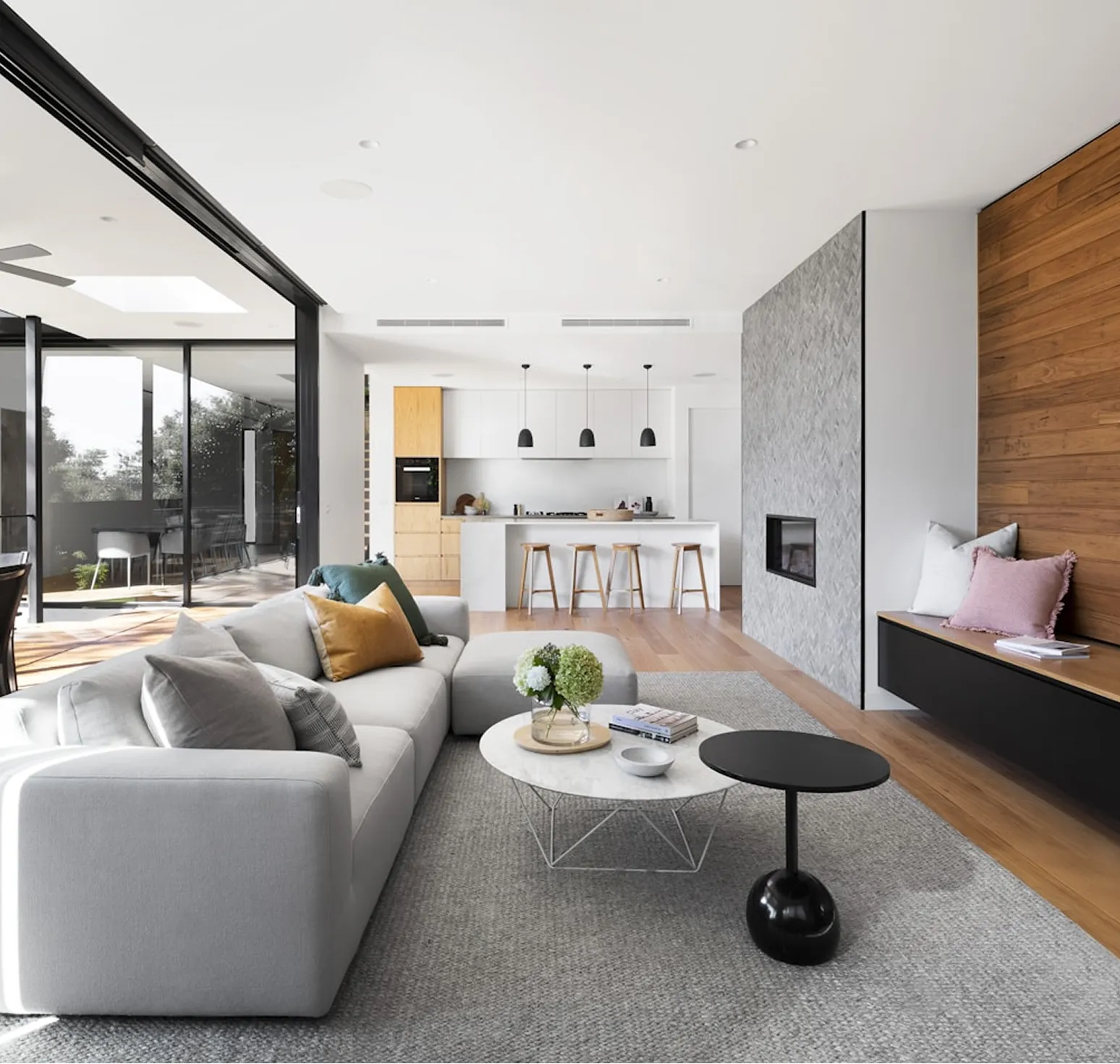
Hiring a custom home contractor Largo families can trust comes down to five checks: an active Florida license you can verify on the DBPR site, proper insurance, experience building to current wind-load requirements, a detailed written scope and contract, and a communication style that works for you over a long build. Price matters too, but a low bid from a builder who fails any of those checks is rarely the cheaper path. The checklist below walks through each one, with the questions to ask in an interview.
Largo sits in Pinellas County, one of the most densely built counties in Florida, so many custom projects here are infill: tearing down an older house to build new, or adding substantially to an existing one. That changes what you should look for in a builder compared with a greenfield subdivision.
Check 1: License and Insurance, Verified Yourself
Florida licenses general, building and residential contractors through the Department of Business and Professional Regulation. Ask for the license number and look it up on the DBPR website. Confirm three things: it is active, the license category covers the type of building you want, and the name on the license matches the company on the contract.
Then request a certificate of insurance for general liability and workers compensation, sent directly from the insurer if possible. A builder without workers compensation coverage can leave you exposed if someone is injured on your lot. Our page on what it means to be a licensed and insured contractor explains why both matter.
Check 2: Experience With Wind, Water and Florida Building Code
A new home in Pinellas must meet the Florida Building Code's wind provisions, which govern roof attachment, impact-rated openings or shutters, and the continuous load path that ties roof framing down to the foundation. Parts of the county also sit in flood zones, where the lowest floor elevation and construction methods follow floodplain rules. Ask a prospective builder:
- How do you handle the load path from roof trusses to foundation, and what connectors do you typically use?
- Do you usually specify impact windows and doors, or shutters, and why?
- Have you built on lots where the required floor elevation affected the design?
- How do you sequence the roof to get the house dried in quickly during the rainy season?
A builder who answers fluently, without reaching for vague reassurances, has probably done it many times.
Ready to start your project?
Get a free, no-pressure consultation and an honest written quote from a licensed Florida team.
Check 3: A Scope and Contract You Can Actually Read
Custom building involves hundreds of decisions, and the contract is where they are captured. Look for:
- Plans and specifications referenced by date and revision, so there is no confusion about which drawings govern.
- Allowances for finishes not yet selected, such as flooring, plumbing fixtures and lighting, with clear amounts.
- A draw schedule tied to completed stages (foundation, framing, dry-in, and so on) rather than calendar dates.
- A change order process stating that changes are priced and signed before work proceeds.
- Warranty terms covering workmanship, separate from manufacturer warranties on products.
- Responsibility for permits, impact fees, utility connections and site work spelled out.
Cost-plus and fixed-price contracts each have trade-offs. Fixed price gives certainty but pushes risk into the price; cost-plus is transparent but needs trust and good reporting. Ask the builder which they use and why.
Check 4: How They Communicate Over a Long Build
A custom home takes many months. You will speak with your builder more than with most of your friends during that time. Ask who your day-to-day contact will be, how often you will get updates, whether there is a shared schedule or photo log, and how quickly questions get answered. Meet the person who will actually run your job site, not just the salesperson.
Pay attention to how they handle the first meeting. Did they listen to how you live, or pitch a standard plan? Did they explain trade-offs honestly, including where your wish list might strain the budget?
Check 5: Red Flags When Interviewing a Custom Home Contractor Largo Buyers Should Avoid
- Large deposits demanded before plans are finalized or permits applied for.
- Reluctance to put allowances, timelines or warranty terms in writing.
- A license under a different name than the company on the proposal.
- Suggestions to skip permits or inspections to save time.
- Bids far below others with no clear explanation of what is excluded.
- No physical business address or references from recent completed homes.
One red flag is not always disqualifying, but two or three together usually are. Our guide to hiring a general contractor includes more questions worth asking.
Infill Lots, Teardowns and Major Additions
On an established lot, the builder has to deal with demolition, existing utilities, tree protection, tight access for trucks and neighbors on all sides. Setbacks may limit the footprint, pushing the design upward. Sometimes a full teardown makes sense; other times, keeping the existing structure and adding a significant wing or second story achieves the goal for less. A builder experienced with both can talk you through that choice without bias.
If you are weighing that route, read about what goes into a second-story addition before you commit to a teardown.
Budget Reality Without Guesswork
Builders will often talk in cost per square foot, but that number hides a great deal. Foundations, site work, roof complexity, window packages and finish level all change it. A simple rectangular plan with a hip roof costs less to build than one with many corners and roof planes, even at the same square footage. Ask your builder to show you where your money goes by category, and keep a contingency for items like soil conditions that cannot be fully known in advance.
What to Bring to the First Meeting
You will get far more useful answers if the builder has something concrete to react to. Before the first sit-down, gather:
- The lot survey, or at least the address and parcel information, so setbacks and flood zone can be checked.
- A rough wish list ranked by priority: bedroom count, garage size, outdoor living, office space.
- Photos of homes, kitchens and exteriors you like, plus a few you dislike, which can be just as revealing.
- Your realistic budget range, including what you plan to finance and what you will pay from savings.
- Your preferred move-in window, so the builder can tell you honestly whether it is achievable.
Builders who ask follow-up questions about that material, rather than pushing straight to a price, are usually the ones who plan carefully once construction starts.
Verify the license yourself, read the contract line by line and meet the site supervisor. Those three steps eliminate most bad builder experiences before they start.
Assured Supreme Contracting is a licensed and insured Florida contractor that builds new homes and major additions in Largo and across Florida. We pull permits, coordinate every trade as one accountable team and provide a workmanship warranty. Explore our new construction services, then schedule a free consultation for an itemized written quote. Use this checklist with every custom home contractor Largo has to offer, including us.
Frequently Asked Questions
Search the contractor's name or license number on the Florida DBPR online license lookup. Confirm the license is active, that the category covers residential or general building, and that the license holder is connected to the company on your contract. Look for any disciplinary history listed on the record as well.
Both are Florida license categories. A certified general contractor can generally work on a broader range of structures, while a building contractor's scope is somewhat narrower, and residential contractors focus on homes of limited height. For a single-family custom home, any of the three may be appropriate. Confirm the license category matches your project.
It often helps to involve a builder before closing. They can flag setbacks, flood zone elevation requirements, utility availability, soil concerns and demolition costs that affect what you can build. A lot that looks like a bargain can become expensive once site work and elevation needs are factored in.
A load path is the continuous chain of connections that carries wind uplift and lateral forces from the roof down through walls into the foundation. Straps, clips, anchors and properly nailed sheathing form the chain. The Florida Building Code requires it, and inspectors check connections before walls are covered.
New homes in wind-borne debris regions must have protected openings, which can be satisfied with impact-rated windows and doors or with approved shutters. Requirements depend on the home's location and wind design. Many owners choose impact glass for convenience. Your builder and the building department can confirm exactly what applies to your lot.
A draw schedule sets out when payments are due during construction, usually tied to completed stages such as foundation, framing, dry-in, rough mechanicals and final. It protects the owner by matching payments to progress. Lenders on construction loans often inspect each stage before releasing funds.
Fixed price offers budget certainty but includes the builder's risk margin. Cost-plus shows actual costs with an agreed fee on top, which can save money but requires careful tracking. Some builders offer a hybrid with a guaranteed maximum. The right choice depends on how complete the plans are and your comfort with variability.
Talking with three is a reasonable starting point. Fewer makes comparisons hard, while many more can become overwhelming. Give each the same plans or wish list so bids are comparable, and look at what is included and excluded, not only the total. Ask each for references from homes completed recently.
Contracts should describe expected duration and how delays are handled, including weather, material shortages and owner changes. Some include provisions for delays caused by the builder. Read these clauses before signing, and keep a record of change orders, since owner changes are a common source of schedule extensions.
Some builders allow owner-supplied items such as light fixtures or appliances, though they may exclude them from warranty and charge for installation. Bringing your own subcontractors is less common because it complicates scheduling and responsibility. Discuss it before signing so the contract reflects any arrangement clearly.
A workmanship warranty covers defects in how the builder or their crews performed the work, such as installation errors. It is separate from manufacturer warranties on products like windows, roofing materials and appliances. Ask for the terms in writing, including duration, what is excluded and how to submit a claim.
It can. Infill projects involve demolition, removing old foundations, managing tight access and protecting neighboring properties. Utility connections may need upgrading. On the other hand, an established lot often comes with mature landscaping and an existing neighborhood. Site-specific costs should be identified early in the budget.