




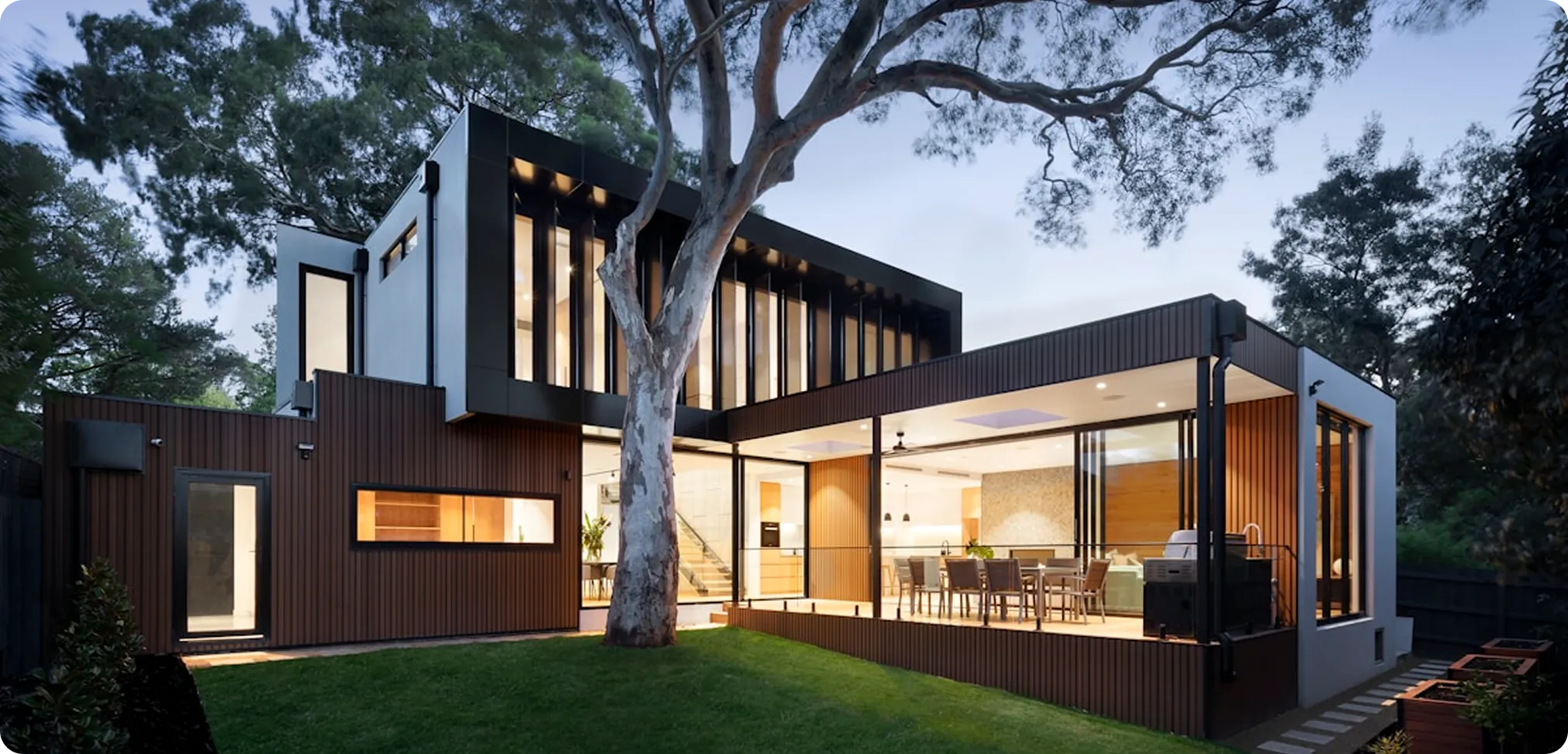
It's a question almost every growing family or evolving household eventually faces: you've outgrown your home, or it no longer fits your life, so do you add on to where you are, or do you pack up and buy somewhere bigger? It's a major decision with financial, practical, and emotional dimensions, and there's no single right answer, it depends on your situation.
Both paths can get you to the same place, more space and a home that fits your needs, but they get there very differently, with different costs, hassles, and trade-offs. Moving means a new house but also the upheaval and expense of selling and buying. A home addition means staying put but living through construction. Weighing them honestly is the key to a decision you won't regret.
In this guide we'll help you think through home addition versus moving, the costs, the practical considerations, and the questions that point you one way or the other. And whenever you want to explore what an addition to your home would involve, a free consultation is the place to start.
The short version: Adding on lets you stay in a home and neighborhood you love and can be cost-effective, but means living through construction. Moving gets you a different home without the build, but carries the costs and upheaval of selling and buying. Your attachment to your location, your budget, and your specific needs point the way.
The Real Question Behind the Decision
Before comparing costs, it helps to identify what's really driving your decision, because that often points to the answer more clearly than the numbers alone.
Ask yourself: do you love where you live? If you're attached to your neighborhood, your kids' schools, your commute, your neighbors, and the only problem is that your home is too small or doesn't quite work, that's a strong argument for adding on, you can keep everything you love and fix the one thing that doesn't work. Moving would mean giving up things you value to solve a problem an addition could solve.
On the other hand, if there are things about your location you'd happily leave, a longer commute than you want, a neighborhood you've outgrown, or you simply crave a change, then moving might make more sense, since it addresses more than just the space. So start with this question: is it just the house that's the problem, or is it the location too? Your honest answer shapes everything that follows.
The Cost of Adding On
Let's look at the financial side of a home addition. The cost depends heavily on what you're adding, the size, complexity, and finishes all matter, but there are some general principles.
A home addition is a significant investment, but it lets you add exactly the space you need, a bedroom, a larger kitchen, a family room, a second story, without paying for an entirely new house. You're adding targeted value to a home you already own. The cost scales with the size and complexity of the addition and the level of finishes you choose. Our guide on home addition cost breaks this down in detail.
Importantly, a well-planned addition also adds value to your home, so part of the cost comes back as equity. And you avoid the substantial transaction costs of moving, which we'll cover next. For many homeowners, especially those happy with their location, an addition delivers the space they need at a cost that compares favorably to buying a bigger home, while letting them stay put.
The Hidden Costs of Moving
Moving might seem simpler, just buy a bigger house, but the true cost of moving is often higher than people expect, because of all the transaction costs involved.
When you move, you face the costs of selling your current home (including agent commissions and preparing it for sale), the costs of buying the new one (closing costs, fees, and the higher price of a bigger home), moving expenses, and often a higher mortgage and property taxes on the more expensive home. These transaction costs add up to a substantial sum that doesn't buy you any actual living space, it's just the cost of the transition.
There's also the upheaval: the time and stress of selling, house-hunting, and relocating your whole life. For families, there's the disruption of changing neighborhoods and potentially schools. None of this is to say moving is wrong, sometimes it's clearly the right choice, but it's important to account for these real costs and hassles when comparing it to an addition, rather than assuming moving is automatically simpler or cheaper.
Considering adding on instead of moving?
Get a free consultation on what an addition to your home would involve and cost.
Practical Considerations Beyond Cost
Cost matters, but several practical factors should also weigh in your decision. Here are the big ones.
Can your lot and home accommodate an addition?
Not every property can be added onto easily. Your lot size, setback requirements, your home's structure, and local zoning all affect what's possible. A consultation can quickly tell you whether the addition you envision is feasible, which is essential information for the decision.
Living through construction
An addition means living in your home during construction, with the noise, dust, and disruption that involves. It's temporary, and a good contractor minimizes it, but it's a real consideration, especially for major additions. Moving avoids this, though it carries its own upheaval.
Getting exactly what you want
An addition lets you design exactly the space you need, tailored to your home and life. Buying an existing bigger home means accepting someone else's choices, or renovating after you move. For homeowners with specific needs, the custom nature of an addition is a real advantage.
When Adding On Makes More Sense
To summarize, a home addition tends to make more sense when several of these are true for you:
- You love your location, neighborhood, schools, and community and want to stay.
- The only real problem is space or layout, which an addition can directly solve.
- Your lot and home can accommodate the addition you need.
- You want a custom space tailored exactly to your needs.
- You want to avoid the substantial transaction costs and upheaval of moving.
- You're staying long-term and will enjoy both the added space and the added home value.
When these align, an addition lets you get the home you need without leaving the home you love, often at a favorable cost. Our home remodeling and additions service helps homeowners do exactly this.
When Moving Makes More Sense
Conversely, moving tends to make more sense when:
- There are things about your location, beyond the house, you'd be glad to leave.
- Your lot or home can't reasonably accommodate the space you need.
- You need a significantly different home that an addition couldn't achieve.
- You want a fresh start or a change of scenery.
- The right home is available and the numbers work out favorably for buying.
When these are true, moving addresses more than just space and may be the better path despite its costs. The point of this comparison isn't to push you toward an addition, it's to help you weigh both honestly. Sometimes moving is clearly right; sometimes adding on is. Your specific situation decides.
The Bottom Line
Home addition versus moving comes down to a few key questions: Do you love your location, or would you welcome a change? Is it just the house that's the problem, or more? Can your property accommodate an addition? And how do the real costs, including moving's substantial transaction costs, compare for your situation?
If you love where you live and just need more or better space, an addition often lets you get there without the upheaval and transaction costs of moving, while adding value to a home you'll keep enjoying. If you'd welcome a change of location or need a fundamentally different home, moving may be worth its costs. Both are valid; the right choice is the one that fits your life.
If you're leaning toward exploring an addition, we're happy to assess what's feasible for your home and what it would involve. Reach out for a free consultation or call us at 561.423.4794.
Choosing the Right Team for Your Project
For any significant home project, the contractor you choose is the single biggest factor in how it turns out, so it deserves careful thought. Here's what to look for in a team you can trust.
In Florida, licensing and insurance are essential for accountability and your protection. Beyond that, look for a contractor who manages the project as one accountable team, coordinating the trades and keeping everything organized, on schedule, and on budget, rather than leaving you to juggle separate contractors with no one in charge.
Clear communication, an itemized written quote, and honest guidance round out a contractor worth hiring. The right partner helps you plan realistically, spend where it counts, and avoid costly mistakes, and stands behind their work. That combination is what turns an ambitious project into a result you're happy with, delivered without the chaos and surprises of a poorly managed job.
Planning Your Project the Smart Way
A little planning makes any remodeling project go more smoothly and helps you avoid the surprises, delays, and pressure that catch unprepared homeowners off guard. The homeowners who end up happiest are almost always the ones who planned thoughtfully rather than rushing in, so it's worth approaching your project deliberately.
Start by getting a proper assessment and a clear, written, itemized quote rather than a vague verbal estimate, so you know exactly what you're dealing with and what it will cost. Understand the factors driving your specific situation, set a realistic budget with a cushion for the unexpected, and make sure permitting and code compliance are part of the plan, never skipped to hit a lower price, since cut corners cause far bigger costs later.
Then think in terms of long-term value rather than just the upfront number, and prioritize quality and a reputable, licensed contractor over the lowest bid. Your home is a long-term investment, and approaching any work on it thoughtfully, rather than as a rushed bargain hunt, is how you get a result that lasts and that you'll be glad you chose. A good contractor will help you plan well, not pressure you into decisions before you're ready.
Your Next Step in South Florida
If the questions and details in this guide have you thinking about your own home, the most useful thing you can do is turn that thinking into a clear, informed plan, and that starts with an honest professional assessment. There's no substitute for having an experienced, licensed contractor look at your specific situation and give you straight answers.
Every home is different, and general guidance only takes you so far. What looks like one thing from a distance can turn out to be another once a professional takes a proper look, and the right recommendation always depends on the specifics of your home, your goals, and your budget. That's exactly why we offer a free consultation about your project with no obligation, so you can make decisions based on your real situation rather than guesswork.
We serve homeowners and businesses across South Florida, from Miami-Dade through Broward and Palm Beach County, with the honest guidance, quality workmanship, and accountability that come from being a licensed, established local contractor. Whether you're ready to move forward or just gathering information, we're happy to help you understand your options. Reach out for a free consultation about your project or call us at 561.423.4794, and we'll give you the clear, honest answers you need to take the next step with confidence.
The Assured Supreme Difference
Choosing who to trust with your home is a personal decision, and we don't take it lightly when homeowners choose us. What we offer isn't complicated, it's the combination of things that should be standard but too often aren't: proper licensing and insurance, genuine local roots, honest assessments, fair fixed pricing, quality workmanship, and accountability that doesn't disappear once the job is done.
We believe an informed homeowner makes the best decisions, which is why our guides explain the real factors honestly rather than steering you toward the biggest possible sale. When we assess your home, we tell you what you actually need, even when that's less than you expected, because we're building long-term trust and a local reputation, not chasing a single transaction. That philosophy runs through everything we do, from the smallest repair to a full custom build.
South Florida's climate is demanding, its codes are strict, and its storms are real, which makes the quality and integrity of the work that protects your home matter more here than almost anywhere. Whether your project is large or small, urgent or something you're planning for down the road, our commitment is the same: do right by you and your home, with work that holds up and advice you can trust. That's the standard we hold ourselves to on every job, for every customer, across every corner of South Florida we serve.
Local Expertise That Makes a Difference
There's a real advantage to working with a contractor who knows South Florida specifically, not just the general trade, but the particular demands of building and protecting homes in our corner of the state. The conditions here are unlike almost anywhere else, and that local knowledge shows up in the quality and durability of the work.
Our climate is uniquely demanding: intense year-round sun and UV, heavy seasonal rain, high humidity, coastal salt air, and of course hurricane season. Each of these stresses homes in ways that a contractor unfamiliar with the region might overlook. Add to that some of the strictest building codes in the nation, the High-Velocity Hurricane Zone requirements, and you have an environment where doing things the right way, the local way, genuinely matters for how well your home holds up over the years.
A contractor who works here every day understands all of this as second nature, from the materials and methods that stand up to our conditions to the permitting and code requirements that vary across Miami-Dade, Broward, and Palm Beach County. That local fluency means fewer surprises, work that's built to last in our specific climate, and guidance grounded in real experience with homes like yours. It's one more reason that choosing an established local contractor, rather than an out-of-area operator, protects your investment and your peace of mind.
Serving Homeowners Across South Florida
Assured Supreme Contracting proudly serves homeowners and businesses throughout South Florida, across Miami-Dade, Broward, and Palm Beach County and the communities within them. From coastal homes facing salt air and storm exposure to inland properties dealing with our intense sun and heavy rain, we bring the same standard of quality, honesty, and accountability to every project, wherever you are in the region.
Being a local contractor means we understand the specific challenges of the area you live in, the building requirements that apply, the climate conditions your home faces, and the kind of work that holds up here for the long term. It also means we're part of the same community, with a reputation we intend to keep, which is exactly why we treat every customer's home the way we'd want our own treated. When you choose a local team that's invested in the area, you get a contractor who's still here, still accountable, long after the work is done.
Why Getting This Right Matters
It's easy to treat decisions about your home as just another item on a to-do list, but the work that protects and improves where you live carries real weight. A roof, a window, a remodel, these aren't disposable purchases; they're long-term investments in your comfort, your safety, and the value of your largest asset. Getting them right pays off for years, and getting them wrong can cost far more than the original job ever would have.
That's why we encourage every homeowner to slow down, get informed, and make decisions based on real information rather than pressure or guesswork. The few extra days it takes to get a proper assessment, compare your options honestly, and choose a contractor you trust are nothing compared to the years you'll live with the result. An informed, unhurried decision is almost always a better one, and it's the kind of decision we want every customer to feel good about long after the work is finished.
Questions? We're Happy to Help
If you have questions after reading this, that's a good sign, it means you're taking the decision seriously, which is exactly the right approach. There's no such thing as a silly question when it comes to your home, and a good contractor should be glad to answer them rather than rushing you toward a signature. We certainly are.
Whether you want a second opinion, a clearer explanation of your options, or simply an honest assessment of where things stand, we're here to help with no pressure and no obligation. The best decisions come from good information and a contractor you trust, and we'd be glad to provide both. Reach out whenever you're ready, by phone at 561.423.4794 or through our contact page, and we'll give you straight, helpful answers grounded in real experience with homes across South Florida.
Warranty terms in writing tell you how a contractor views the years after the check clears. A real workmanship warranty, clearly stated, is a promise that they expect to stand behind the work and be reachable when you need them.
Material selections made early and ordered promptly keep the calendar honest, because the longest delays on most remodels come from waiting on something that was decided late. A good contractor pushes you to lock choices before they become the bottleneck.
Communication cadence is worth agreeing on before the first day. Knowing who your point of contact is, how often you will get updates, and how decisions get made prevents the slow erosion of trust that happens when a homeowner feels left in the dark. The best projects run on clear, regular communication, not just good carpentry.
A detailed written contract is the single best protection you have on any remodel. It should name the scope, the materials, the timeline, the payment schedule tied to milestones, and how changes are handled. A contractor who welcomes putting all of this in writing is showing you how they will treat you once the work begins.
Permits exist to protect you, not to slow you down. Permitted, inspected work means a neutral third party has confirmed the structural, electrical, and plumbing work meets code, which protects your insurance and your resale value. A contractor who offers to skip the permit is offering to transfer that risk onto you.
A dedicated project manager or single point of contact keeps a multi-trade job coherent. When the electrician, the plumber, and the finish carpenter all answer to one coordinator, the schedule holds and the details do not fall through the cracks.
A walkthrough at the start and a punch list at the end bookend a professional job. Documenting the starting condition and then methodically closing out every small item at completion is how a project ends cleanly rather than trailing loose ends.
Protecting the parts of your home that are not being renovated, floors, furniture, HVAC returns, is a sign of a crew that respects your space. Dust control and daily cleanup are not luxuries; they are the difference between a livable project and a miserable one.
The lowest bid is rarely the cheapest project. A quote that comes in far under the others usually means something has been left out of the scope or will reappear later as change orders. Comparing bids line by line, on scope rather than the bottom number, is how you find real value instead of a tempting trap.
Frequently Asked Questions
It depends, but moving's true cost is often higher than expected once you include agent commissions, closing costs, moving expenses, and the higher price, mortgage, and taxes of a bigger home, none of which buys living space. An addition adds targeted space and value to a home you own. For homeowners happy with their location, adding on often compares favorably.
Start by asking whether it's just the house that's too small, or whether you'd also welcome a different location. If you love your neighborhood and just need more space, an addition lets you keep what you love and fix what you don't. If you'd happily leave your location or need a fundamentally different home, moving may make more sense.
Not every property can be added onto easily, it depends on your lot size, setback requirements, your home's structure, and local zoning. A professional consultation can quickly assess whether the addition you envision is feasible for your specific home and lot, which is essential information before deciding between adding on and moving.
Yes, a well-planned addition adds value to your home, so part of the cost comes back as equity. Adding sought-after space like a bedroom, larger kitchen, or family room increases your home's worth and appeal. The value depends on the quality and relevance of the addition, which is why thoughtful design and good construction matter.
The main downsides are living through construction, with temporary noise, dust, and disruption, and the upfront cost, though it's often less than moving's total cost. Your lot and home also have to be able to accommodate the addition. A good contractor minimizes the disruption and helps you plan an addition that's feasible and worthwhile.
Moving carries substantial transaction costs that don't buy living space: agent commissions and prep costs to sell, closing costs and fees to buy, moving expenses, and often a higher mortgage and property taxes on a bigger home. There's also the time, stress, and upheaval of selling, house-hunting, and relocating. These should be weighed against the cost of an addition.